61 Reasons Why Singapore Is Still One of the World's Best Places to Live, Work and Build a Career in 2026
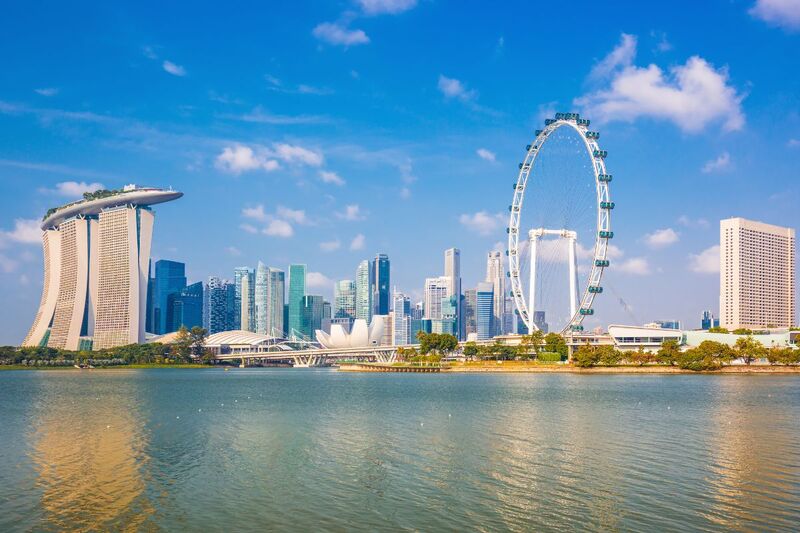
Singapore has never tried to compete on size. At just 734 square kilometres, smaller than New York City, it competes on capability instead. Sixty-one years after independence, that bet has paid off in ways that are unusually easy to measure this year: a country with almost no natural resources now runs the world's best airport, sits among the world's safest nations, and has just overtaken Switzerland, a country that has spent two centuries building a reputation for stability, to take first place in a major global competitiveness ranking.
At Reeracoen Singapore, we've spent the past year analysing salary trends, surveying 375 hiring managers, and studying insights from hundreds of professionals through our Salary Guide and employee research. What we keep finding is that the qualities employers and candidates value most in 2026, specialised skills over headcount, stability over speculation, transparency over silence, are the same qualities that built this economy. That shows up in real numbers, not just historical narrative.
Here are 61 reasons why, organised around six things Singapore continues to get right.
A Country the World Still Trusts (1–10)
Trust is not a soft metric. It shows up in where global institutions choose to rank a country, and in 2026, Singapore's numbers kept climbing.
- Changi Airport was named the World's Best Airport for the 14th time at the 2026 Skytrax World Airport Awards, a record no other airport on earth has come close to matching.
- Changi also collected four more major titles this year, including World's Best Airport Dining, World's Best Airport Immigration Service, and Best Airport in Asia.
- Jewel Changi, home to the world's tallest indoor waterfall, illustrates Singapore's approach to designing infrastructure that combines functionality with visitor experience, not just capacity.
- Singapore placed among the top 10 safest countries in the 2026 Global Peace Index, in a year when global peacefulness declined for the twelfth consecutive year running.
- Singapore remains one of the least corrupt countries in the world on the Transparency International Corruption Perceptions Index.
- Singapore took first place in the 2026 IMD World Competitiveness Ranking, overtaking Switzerland, which fell to third, a country whose name has been shorthand for economic stability since long before Singapore existed as an independent state.
- Two of Singapore's universities placed in the top 12 of the 2026 QS World University Rankings, with the National University of Singapore at 8th and Nanyang Technological University at 12th globally.
- Singapore's hawker culture, the coffee shops and food centres that feed the entire country daily, holds UNESCO Intangible Cultural Heritage status, a rare instance of everyday life itself being recognised as world-class.
- Singapore ranked 4th globally in the March 2026 Global Financial Centres Index, just one rating point behind third-placed Hong Kong, and placed among the top three centres worldwide in the Government & Regulatory sub-index.
- Singapore's legal system is consistently ranked among the most transparent and enforceable in the world, the kind of unglamorous reliability that underwrites every other reason on this list.
One of Asia's Best Places to Build a Career (11–20)
Singapore's labour market told a more interesting story in 2026 than “hiring boomed” or “hiring slowed.” It grew, steadily, even as employers became more selective, a healthier signal than either extreme. In Reeracoen's own Hiring Manager Survey 2025/2026, 68.6% of employers ranked digital and AI-related skills as the training area they value most, well ahead of any other category. That is capability thinking, and it mirrors exactly the strengths that built this economy in the first place.
- The 2026 Salary Guide shows continued wage growth in banking, semiconductors, and AI, exactly the sectors where Singapore has chosen to compete rather than the sectors where it happens to have workers.
- AI-related public sector roles commanded wage premiums as high as 107% in 2025 according to PwC's 2026 Global AI Jobs Barometer, telling professionals in adjacent fields exactly where to point their next skill investment.
- 65.1% of employers surveyed by Reeracoen cite skills mismatch as a top hiring challenge, which sounds like a warning but is really an opportunity for candidates willing to upskill deliberately.
- Singapore's One Pass and Employment Pass (EP) frameworks kept drawing senior global talent into the country this year, the kind of leadership hires that signal a company is betting on Singapore for the next decade, not the next quarter.
- The semiconductor and precision engineering sector kept expanding through 2026 on continued investment from global chipmakers.
- The professional services sector proved something more subtle than survival: it adapted to a slower financial market rather than shrinking, a different and more durable kind of resilience.
- SkillsFuture continues to fund genuine, government-backed upskilling rather than leaving reskilling entirely to individual employers.
- Singapore's bilingual advantage, particularly in Japanese and Mandarin, continues to command real, measurable salary premiums in 2026, according to Reeracoen's own Salary Guide data, not a vague cultural nicety but an actual line item in a compensation package.
- A dense concentration of regional headquarters means career paths here often lead to leadership roles across Southeast Asia, not just within Singapore's own borders.
- Singapore's Employment Pass criteria continued to evolve in 2026, giving companies clearer rules for bringing in specialist talent even as overall foreign workforce growth is more tightly managed.
Why Global Companies Keep Investing Here (21–30)
Companies do not choose Singapore because it is pleasant. They choose it because the risk of getting a multi-year bet wrong is lower here than almost anywhere else in the region.
- Singapore's AI governance frameworks for hiring and HR, introduced in 2026, gave employers a clearer rulebook than most other markets in the region have managed to produce, at a moment when most governments are still guessing.
- The National AI Strategy (NAIS) 2.0 and Budget 2026 gave companies concrete direction on how to invest in AI talent and infrastructure, not just encouragement to do so.
- PSA's Tuas Mega Port is on track to become the world's largest fully automated container terminal, handling up to 65 million containers a year once complete, a scale that will roughly double Singapore's current port capacity.
- The country's position as a genuine gateway between East and West, not a marketing phrase but an operational reality for companies serving both Asian and global clients, continues to anchor Singapore as a preferred regional headquarters location.
- Singapore's start-up ecosystem kept attracting funding even as global venture capital became markedly more selective in 2026.
- The Central Provident Fund system gives employers a structured, predictable framework for long-term employee benefits that few regional competitors can match in maturity.
- Marina Bay's transformation from reclaimed land to financial district in under three decades remains one of the clearest physical proofs that Singapore executes on long-term plans rather than merely announcing them.
- Singapore's semiconductor investment boom in 2026 signals that global chipmakers still see the country as a long-term manufacturing and R&D base, not a short-term cost play.
- Statutory boards such as Enterprise Singapore continue to provide grants and internationalisation support that lower the real cost of scaling a business here, not just entering the market.
- Singapore's stable government and long policy runway let companies plan multi-year workforce strategies with a level of confidence that is genuinely rare in the region.
Innovation That Shapes Tomorrow (31–40)
A city with no room to expand outward has had to get very good at expanding in every other direction.
- Singapore's land area has grown by roughly 25% since independence, almost entirely through land reclamation, meaning a meaningful share of the ground modern Singapore is built on did not exist when the country became independent in 1965.
- The MRT network now runs more than 240 kilometres, connecting the island at a density a car-first city could never replicate.
- The Cross Island Line and the RTS Link to Johor Bahru, both under construction, will extend that network further within the next few years.
- NEWater, Singapore's own reclaimed and purified water supply, turned a national vulnerability, having almost no natural freshwater, into a globally studied engineering success story.
- Changi Airport's Terminal 5 development continues to progress, positioning Singapore's aviation capacity for the next decade rather than merely maintaining today's.
- Singapore's government keeps funding quantum computing and AI research for financial institutions, infrastructure most residents will never see but every employer in finance will eventually depend on.
- The accelerating Smart Nation 2.0 push continues to modernise government and business services in ways that quietly save companies real administrative time.
- Singapore's green economy created entirely new categories of jobs, from sustainability compliance to green finance, across 13 sectors in 2026.
- Gardens by the Bay, now over a decade old, remains proof that Singapore treats green infrastructure as core urban planning, not decoration.
- The country's willingness to fund feasibility studies for infrastructure decades before it is needed reflects a planning horizon most governments do not sustain.
Quality of Life That Professionals Value (41–50)
The reasons people stay in Singapore, once they have already chosen to work here, are quieter than the reasons they arrive. According to Reeracoen's Beyond the Paycheque study, stability, transparency, and genuine manager relationships now matter to Singapore employees as much as salary itself. That is not a trend unique to this year. It reflects a country that has always treated these things as infrastructure, not perks.
- Singapore is one of the few countries in the world where you can drink water directly from the tap almost anywhere on the island, a small fact that says more about the reliability of its public infrastructure than most economic indicators do.
- The Housing and Development Board system, still one of the most successful public housing models in the world at its scale, gives the large majority of residents a stable, owned home rather than a lifetime of renting.
- CPF LIFE provides all Singapore citizens a guaranteed monthly income for life from around age 65, a national retirement security model few countries attempt at this scale.
- The country's compact geography means most professionals can cross the entire island in under an hour, turning networking and cross-company relationships into something that happens in weeks here, not months.
- Mandatory flexible work arrangement guidelines, introduced in 2024, continue to shape how employers structure work in 2026.
- Singapore's healthcare system remains a genuine reason the country consistently ranks well on global quality-of-life indices, not just an assumed benefit of wealth.
- Ageing workforce policies, including a rising retirement and re-employment age, have been paired with real efforts to keep senior professionals engaged rather than sidelined.
- Continued investment in supporting working parents, from parental leave enhancements to workplace flexibility norms, keeps expanding rather than stalling.
- Singapore's vehicle quota system, while a genuine cost to car owners, has kept the country among the least congested major cities in Asia, a real and measurable time saving for daily commuters.
- Singapore's low personal income tax rates relative to other developed economies remain a genuine, if rarely discussed, career draw.
The Singapore Spirit (51–61)
The most telling thing about Singapore at 61 is what it has chosen not to become.
- It has not treated wealth as a reason to stop investing in fairness. The Workplace Fairness Act, passed through Parliament and taking full effect by end-2027, gives Singapore one of the clearer legal frameworks on employment discrimination in the region, built at a point in its development when many countries would have considered the job done.
- Racial Harmony Day and the policies behind it remain a genuinely lived part of workplace culture in 2026, not a once-a-year calendar entry.
- Singapore's tripartite model, government, unions, and employers negotiating together rather than against each other, has held through pressures that break less cooperative systems.
- The country continues to top or near-top major global indices, safety, competitiveness, airport quality, financial centre standing, in the same year, a rare combination for any single country to hold at once.
- Singapore's approach to housing, healthcare, and retirement savings is unusually integrated: CPF, HDB, and public healthcare were designed to work together as one system rather than as three separate policy silos.
- Singapore treats workforce reskilling as a shared national investment, not an employer cost centre alone, a philosophy visible in how consistently SkillsFuture funding has been renewed and expanded across six decades of continuous labour market change.
- Singapore's Total Defence framework, spanning military, civil, economic, social, digital, and psychological resilience, reflects a whole-of-nation approach that shaped how the country weathered disruptions from COVID-19 to more recent global economic shocks.
- Changi Airport's own history, from a single runway when it opened in 1981 to the World's Best Airport in 2026, encapsulates the same pattern visible across the rest of the economy: modest beginnings, deliberate reinvestment, category-leading results decades later.
- Singapore's economy grew through a year that saw many global markets slow, a sign of resilience built over decades, not luck in a single cycle.
- Every institution on this list, Changi, the MRT, HDB, NEWater, PSA, SkillsFuture, was built by a country that started with fewer resources than almost any of its regional neighbours.
- At 61 years old, Singapore is still being actively rebuilt and reinvested in, not coasting on its past reputation, which is ultimately the best reason of all to build a career or a business here.
None of this means Singapore is without challenges. Employers continue to grapple with talent shortages, rising labour costs, and rapid technological change, while professionals face increasing pressure to continuously upskill. Yet perhaps that is precisely why Singapore continues to perform so well globally: it has rarely assumed today's success guarantees tomorrow's.
Singapore's greatest achievement isn't becoming one of the world's safest, cleanest, or most competitive nations. It's proving that a country with almost no natural resources can continually reinvent itself through people, ideas, and ambition. As Singapore turns 61, that may be its greatest lesson for employers and professionals alike: success is never something you inherit. It's something you keep building.
Frequently Asked Questions
Why did Changi Airport win World's Best Airport again in 2026?
Changi won its 14th World's Best Airport title at the 2026 Skytrax World Airport Awards, based on passenger surveys covering comfort, cleanliness, dining, immigration, and overall experience.
How much has Singapore's land area grown since independence?
Singapore's land area has grown by roughly 25% since independence in 1965, almost entirely through land reclamation.
What does Reeracoen's own research say about what employers value in 2026?
In Reeracoen's Hiring Manager Survey 2025/2026 (n=375), 68.6% of employers ranked digital and AI-related skills as their top training priority, while 65.1% cited skills mismatch as a leading hiring challenge, evidence that Singapore employers are prioritising capability over headcount.
Where does Singapore rank as a global financial centre in 2026?
Singapore ranked 4th globally in the March 2026 Global Financial Centres Index, just one point behind Hong Kong, and placed among the top three centres worldwide in the Government & Regulatory sub-index.
Is now still a good time to build a career in Singapore?
Yes, particularly in sectors Singapore is actively investing in, including semiconductors, AI, green finance, and professional services, where employers continue to compete for talent even as overall hiring has become more selective.
Get in Touch
- Thinking about your next career move in Singapore? Register with Reeracoen Singapore to be matched with roles across our target industries.
- Looking to hire from one of the deepest talent pools in Southeast Asia? Get in touch with Reeracoen Singapore to discuss your hiring needs.
Related Articles
- 60 Reasons Why Singapore Is the Best Place to Live and Work
- Singapore Tops the Global Talent Competitiveness Index 2025: What It Means for Workers and Companies
- Singapore Hiring Trends 2026: What 375 Hiring Managers Told Us About the Future of Talent
About the Author
Valerie Ong
Regional Marketing Manager, Reeracoen Group
Valerie leads content and market insights for Reeracoen across Asia. She works closely with Reeracoen's specialist recruitment consultants to translate hiring data, salary benchmarks and labour market trends into practical guidance for Singapore's employers and professionals. Her work draws on Reeracoen's proprietary research including the annual Salary Guide, Hiring Pulse, and Hiring Manager Survey.
Language note: This article is published in English. Reeracoen Singapore also publishes selected content in Japanese and Mandarin for our bilingual and Japanese-speaking professional community.
References
- 2026 World Airport Awards. Skytrax. https://www.worldairportawards.com/
- Global Peace Index 2026. Institute for Economics and Peace. https://www.visionofhumanity.org/
- Global Financial Centres Index 39. Z/Yen Group / China Development Institute. https://www.zyen.com/
- IMD World Competitiveness Ranking 2026. IMD World Competitiveness Center. https://www.imd.org/
- QS World University Rankings 2026. Quacquarelli Symonds. https://www.topuniversities.com/
- PwC 2026 Global AI Jobs Barometer, Singapore edition. https://www.pwc.com/sg/
- Land reclamation in Singapore. National Library Board / BiblioAsia. https://www.biblioasia.nlb.gov.sg/
- Land Transport Authority, Singapore. Rail Network. https://www.lta.gov.sg/
- PSA Singapore. Tuas Port. https://www.singaporepsa.com/
- Reeracoen Singapore Hiring Manager Survey 2025/2026.
- Reeracoen Singapore Beyond the Paycheque Employee Sentiment Study 2026.
- Singapore Salary Guide 2025/2026. Reeracoen Singapore.

Disclaimer
Rankings, statistics, and awards cited in this article are drawn from publicly available sources and Reeracoen's proprietary research, and were accurate at the time of writing. This article uses these accolades as a lens on Singapore's workforce and career landscape and is not affiliated with or endorsed by the organisations named.
Related Post
 Singapore Has 68,600 Job Vacancies. So Why Is It Taking Longer to Find a Job?General
Singapore had 68,600 job vacancies in June 2026 and overall unemployment of just 1.9 percent. On paper, that looks like good news for anyone job...
 「I’m Here for You」―Reeracoen Wayが言葉を超えたときGeneral
フィリピンの、とある子どもたちが多く暮らす施設で、聞き慣れたメッセージが流れ始めました。 「I’m Here for You」 2026年8月、Reeracoen Singaporeのブランチマネージャー・須長が、Christian Mission Service Philippines...
- “我在你身边”:Reeracoen之道超越文字的时刻General
在菲律宾的一个儿童村,距离Reeracoen遍布亚洲的各个办公室很远的地方,一段熟悉的旋律开始响起。 “我在你身边。” 这一次,它不是写在演示文稿上,也不是在会议中说出的。 Reeracoen新加坡分公司经理砂贺正一(Shoichi...
- “I’m Here for You”: When the Reeracoen Way Became More Than WordsGeneral
In a children’s village in the Philippines, far from Reeracoen’s offices across Asia, a familiar message began to play. “I’m Here for You.” This...