Singapore National Day Message 2026: What PM Wong's Speech Means for Jobs, AI and Hiring
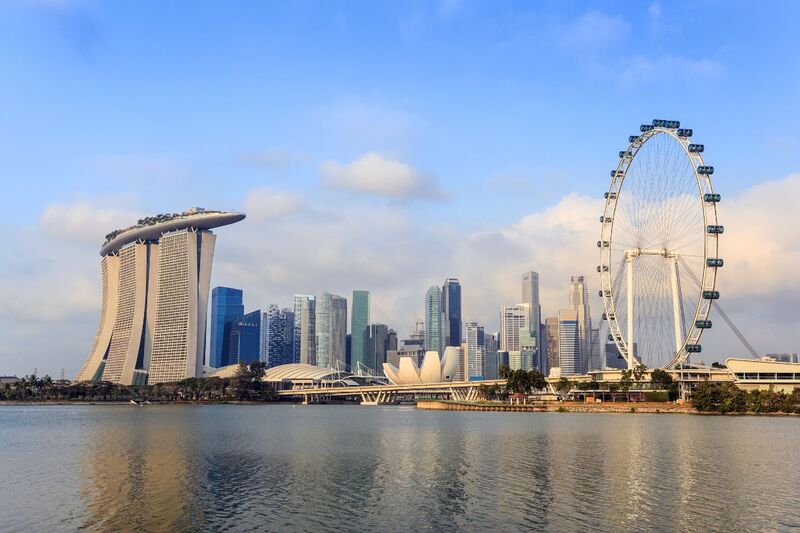
Prime Minister Lawrence Wong's National Day Message 2026, recorded at the National Stadium and telecast on 8 August, set out Singapore's direction against a more uncertain global backdrop. For employers and professionals watching the labour market closely, the message also contained several workforce signals worth examining: resilience today does not remove the need to prepare for disruption tomorrow.
This article looks at the National Day Message specifically through a workforce lens — what PM Wong said, what the latest official labour and digital-economy data show, and what these developments could mean for hiring, skills and retention in the second half of 2026. It is not a summary of the full speech, and it does not speculate on announcements that may come at the National Day Rally.
1. Singapore's Labour Market Remains Resilient — But Risks Are Still Present
PM Wong described conflicts, higher trade barriers and weaker trust between nations, while also saying Singapore's economy had remained resilient, growth was robust in the first half of the year, and the labour market remained stable with new jobs continuing to be created.
The latest Ministry of Manpower (MOM) data gives this resilience more detail. Advance estimates released on 31 July show total employment grew by 10,700 in the second quarter of 2026, marking the 19th consecutive quarter of employment growth since Q4 2021. Unemployment remained low and broadly stable in June 2026: 2.0% overall, 2.9% for residents and 3.0% for citizens.
At the same time, employers should not read stability as an absence of risk. Retrenchments rose from 3,830 in Q1 to 4,500 in Q2, with the incidence increasing from 1.6 to 1.9 per 1,000 employees. MOM said the increase was concentrated in some outward-oriented sectors and driven primarily by business restructuring, while remaining well below levels typically seen during downturns.
The practical workforce reading is therefore a nuanced one. The Q2 increase appears concentrated in specific outward-oriented sectors rather than reflecting a broad-based labour market contraction. Employers should assess their own exposure to trade, restructuring and changing demand instead of applying a single market narrative across every industry.
2. Hiring Sentiment Is Improving, Even as Employers Stay Cautious
MOM's forward-looking indicators also point to resilient labour demand. The share of firms expecting to hire over the next three months rose from 40.6% in May to 43.9% in June 2026. The share expecting to raise wages increased from 23.7% to 29.3%, while the share expecting to retrench fell from 3.2% to 2.7%.
For employers, this suggests that workforce planning should be based on the conditions affecting their sector and business rather than uncertainty alone. Companies that paused hiring may want to revisit their assumptions as new information becomes available. MOM's full Labour Market Report for Q2 2026, expected in mid-September, will add sectoral employment, vacancy and turnover detail to the advance picture.
3. AI Is Becoming a Workforce Strategy, Not Just a Technology Strategy
PM Wong's framing of Artificial Intelligence was deliberately people-centred. He acknowledged that AI is transforming industries and work, while also causing anxiety among workers concerned about their livelihoods. Singapore's approach, he said, is to use AI to raise productivity and create better jobs while investing in skills and training so workers can adapt, grow and thrive.
That direction is already visible in official workforce initiatives. Under the National AI Impact Programme (NAIIP), the Infocomm Media Development Authority (IMDA) is expanding the TechSkills Accelerator (TeSA) to upskill 40,000 tech professionals, including final-year Information and Digital Technologies students, over three years. IMDA is also developing AI fluency programmes with industry partners. Separately, NAIIP aims to support 100,000 workers with domain expertise to become 'AI Bilingual' by deepening their AI fluency and ability to apply AI in their workflows.
For employers, the implication is not simply to adopt more AI tools. It is to examine which roles and workflows can be augmented by AI, what skills employees will need alongside the technology, and whether job redesign and training are being planned together. The SkillsFuture Workforce Development Grant (Job Redesign+) can support eligible workforce transformation and job-redesign projects, with funding of up to 70% for SMEs and up to 50% for non-SMEs, capped at S$150,000 per enterprise.
4. Singapore Is Reaffirming the Importance of Openness
Another important section of the National Day Message concerned Singapore's relationship with the world. PM Wong said that for a small nation, staying connected to the world is 'not a choice' but a necessity. He also spoke about remaining open to new ideas, building links with the wider world and welcoming those who wish to contribute to Singapore and make it their home.
For employers building regional or international teams from Singapore, this is significant as a statement of direction, but it should not be misread as a new foreign-manpower or immigration policy announcement. The specific rules governing international hiring continue to sit within Singapore's separate work-pass and manpower frameworks.
From a talent-strategy perspective, the broader message is that international connectivity remains important to Singapore's economic model. Employers may therefore continue to benefit from building teams that combine strong local capabilities with regional knowledge, cross-cultural experience and the skills needed to operate across markets.
5. Family Pressures Are Becoming a Workforce Issue Too
PM Wong also acknowledged a different source of pressure: the strain on families balancing work, raising children and caring for ageing parents. He said the Government is undertaking a major review of how families are supported throughout life's journey, including the costs of raising children and access to affordable infant care and childcare, with more details to be shared at the National Day Rally.
No new workplace policy was announced in the National Day Message, and employers should not assume what the forthcoming measures will contain. But the concerns highlighted in the speech have clear relevance to the employment experience. When employees are managing caregiving responsibilities alongside work, flexibility, manager support, workload sustainability and employee wellbeing can affect how they experience a role and whether they can build a sustainable career.
For employers, this is a useful reminder that retention is not only about compensation. Workforce practices that help employees manage different life stages can form part of a stronger employee value proposition — particularly when they are designed around genuine business and employee needs rather than treated as one-size-fits-all benefits.
What Employers Can Do Now
- Review workforce plans against sector-specific risks rather than relying only on broad economic sentiment.
- Identify roles and workflows most likely to be augmented by AI, then connect technology adoption with job redesign and skills development.
- Map emerging skills gaps and use available workforce transformation support where eligibility and business needs align.
- Reassess hiring plans as labour-market indicators evolve, including after MOM's full Q2 report is released.
- Review flexibility, manager practices and employee support through the lens of different life stages and caregiving responsibilities.
What Professionals Can Do Now
- Understand how AI is changing your function and identify where human judgement, domain expertise and AI fluency can complement one another.
- Build transferable capabilities and keep skills current rather than waiting until a role is disrupted.
- Use Career Health SG and career coaching and guidance services where useful to plan your next steps.
- Mid-career Singaporeans can explore the SkillsFuture Level-Up Programme for enhanced course-fee support and training allowances.
- Eligible involuntarily unemployed individuals can consider the SkillsFuture Jobseeker Support scheme, which provides temporary support of up to S$6,000 over six months while they undertake active job search.
Hiring in Singapore? Speak to Reeracoen
Whether you are reviewing hiring plans, navigating restructuring, redesigning jobs around AI or strengthening your workforce for the next phase of growth, Reeracoen Singapore can support your recruitment needs with market-informed talent solutions.
Employer enquiry: Submit a Hiring Enquiry to Reeracoen Singapore
Exploring Opportunities in Singapore's Job Market?
If you are considering your next career move or exploring opportunities in a changing labour market, Reeracoen Singapore can help you discover roles that match your experience, skills and aspirations.
Candidate registration: Register With Reeracoen Singapore
What Comes Next: National Day Rally 2026
The National Day Message sets the direction rather than providing every policy detail. PM Wong has said he will share more about the Government's review of family support at the National Day Rally. Reeracoen Singapore will continue to monitor announcements that could affect employers, hiring and working professionals, without pre-empting what those measures may be.
Frequently Asked Questions
What did PM Lawrence Wong say about jobs in the National Day Message 2026?
PM Wong said Singapore's labour market remains stable and new jobs continue to be created, while acknowledging concerns about how global uncertainty may affect jobs and families. He also linked AI adoption with productivity, better jobs, skills and training.
Is Singapore's unemployment rate rising in 2026?
No. MOM's Q2 2026 advance release reported June unemployment rates of 2.0% overall, 2.9% for residents and 3.0% for citizens. These were low and broadly stable compared with March 2026.
Are retrenchments increasing in Singapore?
Retrenchments rose from 3,830 in Q1 2026 to 4,500 in Q2. MOM said the increase was concentrated in some outward-oriented sectors and driven primarily by business restructuring, while remaining well below levels typically seen during downturns.
What is Singapore doing about AI and jobs in 2026?
Under the National AI Impact Programme, IMDA is expanding TeSA to upskill 40,000 tech professionals over three years and aims to support 100,000 workers with domain expertise to become AI Bilingual. PM Wong's National Day Message also emphasised using AI to raise productivity while investing in skills and training.
What support is available for workers navigating career change?
Career Health SG supports Singaporeans in strengthening employability and planning their careers. MOM also points workers to career coaching and guidance through the Skills and Workforce Development Agency and NTUC's Employment and Employability Institute. Other support includes the SkillsFuture Level-Up Programme and, for eligible involuntarily unemployed individuals, SkillsFuture Jobseeker Support.
Did PM Wong announce new family or foreign-manpower policies in the National Day Message 2026?
The message set out direction rather than detailed new policies in these areas. PM Wong said more details on the review of family support would be shared at the National Day Rally. His comments on openness should not be read as a new foreign-manpower or immigration policy announcement.
References
Prime Minister's Office Singapore. (2026, August 8). National Day Message 2026. https://www.pmo.gov.sg/newsroom/national-day-message-2026/
Ministry of Manpower Singapore. (2026, July 31). Labour Market Advance Release – Second Quarter 2026. https://www.mom.gov.sg/newsroom/press-releases/2026/0731-labour-market-advance-release-2q-2026
Infocomm Media Development Authority. (2026, May 8). Major Push to Upskill Tech Professionals and Grow the Next-Generation of Tech Leaders. https://www.imda.gov.sg/resources/press-releases-factsheets-and-speeches/press-releases/2026/major-push-to-upskill-tech-professionals-and-grow-the-next-generation-of-tech-leaders
Infocomm Media Development Authority. (2026, March 2). National AI Impact Programme. https://www.imda.gov.sg/resources/press-releases-factsheets-and-speeches/factsheets/2026/national-ai-impact-programme
Ministry of Manpower Singapore. (2026, March 3). Factsheet on Enterprise Workforce Transformation Package. https://www.mom.gov.sg/-/media/mom/documents/press-releases/2026/factsheet-on-enterprise-workforce-transformation-package-03032026.pdf
Ministry of Manpower Singapore. (2026, May 5). Introduction of the Skills and Workforce Development Agency Bill – Factsheet on SWDA. https://www.mom.gov.sg/newsroom/press-releases/2026/0505-factsheet-on-swda
About the Author
Valerie Ong, Regional Head of Marketing, Reeracoen Group
Valerie leads content and market insights for Reeracoen across Asia. She works closely with Reeracoen's specialist recruitment consultants to translate hiring data, salary benchmarks and labour market trends into practical guidance for Singapore's employers and professionals. Her work draws on Reeracoen's proprietary research including the annual Salary Guide, Hiring Pulse, and Hiring Manager Survey.
Language Note
This article is published in English. Reeracoen Singapore also publishes selected content in Mandarin and Japanese for its bilingual and Japanese-speaking professional community.

Disclaimer
This article has been prepared by Reeracoen based on publicly available government sources believed to be reliable at the time of publication. It is intended for general informational purposes only and does not constitute political commentary, financial, legal or professional advice. Readers should refer to official government sources for the most current policy details. Market conditions may change, and figures reflect data available as at 8 August 2026.
Related Post
 Singapore Has 68,600 Job Vacancies. So Why Is It Taking Longer to Find a Job?General
Singapore had 68,600 job vacancies in June 2026 and overall unemployment of just 1.9 percent. On paper, that looks like good news for anyone job...
 「I’m Here for You」―Reeracoen Wayが言葉を超えたときGeneral
フィリピンの、とある子どもたちが多く暮らす施設で、聞き慣れたメッセージが流れ始めました。 「I’m Here for You」 2026年8月、Reeracoen Singaporeのブランチマネージャー・須長が、Christian Mission Service Philippines...
- “我在你身边”:Reeracoen之道超越文字的时刻General
在菲律宾的一个儿童村,距离Reeracoen遍布亚洲的各个办公室很远的地方,一段熟悉的旋律开始响起。 “我在你身边。” 这一次,它不是写在演示文稿上,也不是在会议中说出的。 Reeracoen新加坡分公司经理砂贺正一(Shoichi...
- “I’m Here for You”: When the Reeracoen Way Became More Than WordsGeneral
In a children’s village in the Philippines, far from Reeracoen’s offices across Asia, a familiar message began to play. “I’m Here for You.” This...