CES 2026 and the Rise of Humanoid Robots: What This Means for Singapore’s Workforce, Hiring & Skills
This article is written in English for readers in Singapore. Chinese and Japanese translations are available on our website.
Why CES 2026 Is a Turning Point for Work
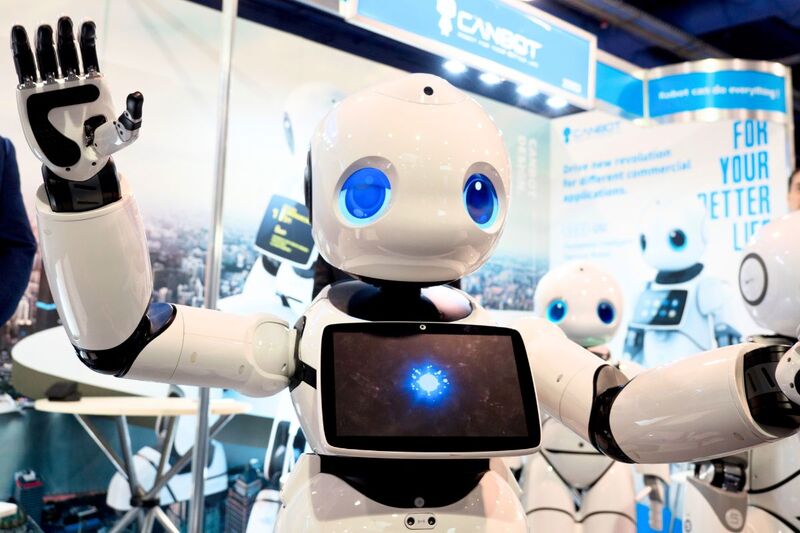
CES 2026 marked a significant shift in how artificial intelligence and robotics are converging. For the first time, humanoid robots were not positioned as distant concepts, but as near-term workforce tools designed to operate alongside humans.
Major announcements at CES showcased humanoids capable of walking, lifting, navigating workplaces, and interacting naturally with people. These developments matter deeply for Singapore, where productivity, manpower constraints, and skills transformation are already top priorities.
Rather than replacing jobs overnight, humanoid robots are reshaping how work is done, which roles will evolve, and what skills employers must prioritise in 2026 and beyond.
What Are Humanoid Robots — and Why Now?
Humanoid robots are AI-powered machines built with human-like movement and perception. Unlike traditional industrial robots, they are designed to work in human environments without heavy infrastructure changes.
At CES 2026, several systems demonstrated:
- Autonomous navigation in warehouses and offices
- Object handling and repetitive task execution
- Real-time decision-making using generative AI models
- Safe collaboration with human workers
The timing is not accidental. Advances in AI compute, edge processing, and robotics hardware have converged, making commercial deployment viable.
Why This Matters for Singapore’s Labour Market
Singapore faces a unique combination of:
- Tight labour supply
- Rising business costs
- An ageing workforce
- Increasing reliance on productivity gains
According to labour market studies, automation and AI adoption are now viewed by employers as necessities rather than experiments.
Humanoid robots are particularly relevant for sectors where Singapore struggles to fill roles consistently:
- Manufacturing and precision engineering
- Logistics and warehousing
- Facilities management
- Healthcare and eldercare support
- Hospitality and services
Rather than eliminating jobs, early adoption is expected to reduce manual strain, stabilise operations, and allow human workers to focus on higher-value tasks.
Which Jobs Will Change — Not Disappear
Based on global hiring observations, roles most affected are those involving:
- Repetitive physical tasks
- Predictable movement and workflows
- High injury or fatigue risk
Examples include:
- Warehouse operations support
- Assembly line assistance
- Equipment handling
- Facilities monitoring
However, new roles are emerging at the same time, including:
- Robotics operations supervisors
- AI and automation coordinators
- Human-machine interaction specialists
- Maintenance and integration technicians
Singapore’s workforce strategy has consistently emphasised job transformation over job removal, and humanoid robotics fits squarely into that model.
Skills Singapore Employers Will Value More in 2026
As humanoid robots enter workplaces, hiring priorities are shifting.
Employers are increasingly assessing candidates on:
- Adaptability to AI-assisted workflows
- Digital and data literacy
- Process improvement thinking
- Safety and compliance awareness
- Communication across human-AI teams
Technical skills remain important, but learning agility and problem-solving are becoming decisive differentiators.
What This Means for Singapore Employers
For companies operating in Singapore, CES 2026 sends a clear signal.
Employers should begin to:
- Audit roles that may be augmented by automation
- Identify skills gaps before deployment
- Prepare workforce communication plans
- Review hiring criteria to include AI readiness
- Strengthen employer branding around future-readiness
Organisations that proactively manage this transition are more likely to retain talent and remain competitive.
What This Means for Singapore Professionals
For professionals, humanoid robots do not signal irrelevance — but transition.
Workers who remain employable in 2026 tend to:
- Upskill continuously
- Embrace technology rather than resist it
- Understand how AI supports productivity
- Position themselves as problem solvers
The strongest career trajectories belong to those who move with technology, not against it.
Frequently Asked Questions (FAQ)
1. Will humanoid robots replace jobs in Singapore?
They are more likely to change job scopes than eliminate roles outright.
2. Which industries will adopt humanoid robots first?
Manufacturing, logistics, facilities management, healthcare support, and hospitality.
3. Should employers start hiring differently now?
Yes. Skills related to adaptability and AI collaboration are already influencing hiring decisions.
4. Do professionals need technical backgrounds to stay relevant?
Not necessarily. Digital literacy and learning mindset matter more than coding skills alone.
5. Is this change happening soon?
Pilot deployments are already underway globally, with broader rollout expected from 2026 onward.
Thinking About Workforce Planning in an AI-Driven Future?
Humanoid robotics is not a future headline — it is a 2026 workforce reality.
👉 For employers: Speak with Reeracoen about hiring strategies, workforce planning, and future-ready talent
👉 For professionals: Register your profile to explore roles aligned with emerging skills
✅ Final Author Credit
By Valerie Ong (Regional Marketing Manager)
Published by Reeracoen Singapore — a leading recruitment agency in APAC.
🔗 Related Articles
- Singapore Hiring Trends 2026: What Employers Should Prepare for in Q1
- AI in Hiring: Policy, Bias & Practical Guardrails for HR
- AI in HR: Preparing for the 2026 Reality Where 1 in 3 Companies Use AI in Hiring
- From IQ to AQ: Building Adaptability in 2026 Teams
- The Top 20 Jobs Unlikely to be Replaced by AI In Singapore
📚 References
- CES 2026 official announcements
- Global AI and robotics workforce studies
- Industry hiring observations from Reeracoen Singapore

Disclaimer:
The information provided in our blog articles is intended for general informational purposes only. It is not a substitute for professional advice and should not be relied upon as such.
While we strive to provide accurate and up-to-date information, the ever-evolving nature of certain topics may result in content becoming outdated or inaccurate over time. Therefore, we recommend consulting with qualified professionals or experts in the respective fields for specific advice or guidance. Any actions taken based on the information contained in our blog articles are solely at the reader's discretion and risk. We do not assume any responsibility or liability for any loss, damage, or adverse consequences incurred as a result of such actions.
We may occasionally provide links to external websites or resources for further information or reference. These links are provided for convenience and do not imply endorsement or responsibility for the content or accuracy of these external sources. Our blog articles may also include personal opinions, views, or interpretations of the authors, which do not necessarily reflect the views of our organisation as a whole. We encourage readers to verify the accuracy and relevance of information presented in our blog articles and to seek professional advice when needed. Your use of this website and its content constitutes acceptance of this disclaimer.
Related Post
 Singapore Has 68,600 Job Vacancies. So Why Is It Taking Longer to Find a Job?General
Singapore had 68,600 job vacancies in June 2026 and overall unemployment of just 1.9 percent. On paper, that looks like good news for anyone job...
 「I’m Here for You」―Reeracoen Wayが言葉を超えたときGeneral
フィリピンの、とある子どもたちが多く暮らす施設で、聞き慣れたメッセージが流れ始めました。 「I’m Here for You」 2026年8月、Reeracoen Singaporeのブランチマネージャー・須長が、Christian Mission Service Philippines...
- “我在你身边”:Reeracoen之道超越文字的时刻General
在菲律宾的一个儿童村,距离Reeracoen遍布亚洲的各个办公室很远的地方,一段熟悉的旋律开始响起。 “我在你身边。” 这一次,它不是写在演示文稿上,也不是在会议中说出的。 Reeracoen新加坡分公司经理砂贺正一(Shoichi...
- “I’m Here for You”: When the Reeracoen Way Became More Than WordsGeneral
In a children’s village in the Philippines, far from Reeracoen’s offices across Asia, a familiar message began to play. “I’m Here for You.” This...