Hiring Across Southeast Asia in 2026: What Employers in Singapore, Vietnam, Malaysia and Taiwan Need to Know Right Now
Author: Valerie Ong, Regional Marketing Manager, Reeracoen Singapore
Language: This article is written in English for readers in Singapore. Chinese and Japanese translations are available on our website.
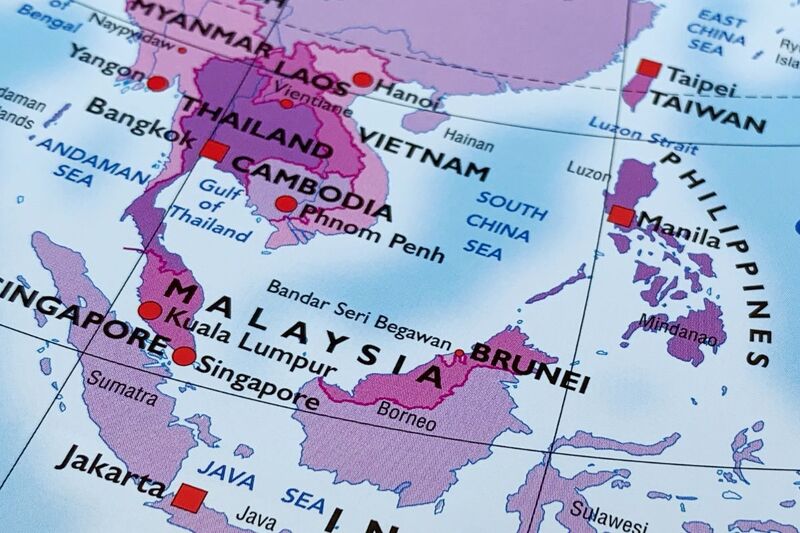
Managing headcount across Southeast Asia in April 2026 is not a single problem. Each market in Reeracoen's coverage region is at a different point in its hiring cycle, and treating them as one is one of the most common mistakes in regional workforce planning.
Here is what is actually happening on the ground across Singapore, Vietnam, Malaysia and Taiwan, and what that means for your hiring decisions right now.
|
Four-Market Snapshot: April 2026 |
|
|
Singapore |
1.58 vacancies per unemployed person | Unemployment 2.0% | MOM Q4 2025 |
|
Vietnam |
52.7M employed | Manufacturing production +10.8% YoY | GSO Q4 2025 |
|
Malaysia |
17.10M employed | Unemployment 2.9% | Economy grew 6.3% Q4 2025 | DOSM Q4 2025 |
|
Taiwan |
GDP grew 8.63% in 2025, 15-year high | Net hiring outlook +30% Q2 2026 | DGBAS 2026 |
|
Regional |
Bilingual professionals command 10 to 20% salary premium across all four markets |
Sources: MOM Q4 2025 | GSO Vietnam Q4 2025 | DOSM Malaysia Q4 2025 | Taiwan DGBAS January 2026 | Reeracoen x Rakuten APAC Workforce Whitepaper 2025
1. Singapore: Selective but Active
Singapore enters Q2 2026 as the most measured hiring market in our region. MOM's Labour Market Report Q4 2025 shows 77,700 job vacancies in December with a ratio of 1.58 vacancies per unemployed person. Unemployment held at 2.0%. Replacement hiring is continuing. Expansion hiring is facing longer approval cycles.
The employee-side picture is equally important. Reeracoen's Beyond the Paycheque Study 2026, conducted with Rakuten Insight across 337 professionals, found that 71.8% of Singapore employees are in some form of job search activity right now. For regional employers, this means attrition risk is higher than your HR data suggests.
For employers: your Singapore-based regional managers and compliance leads are watching the market, even if they have not signalled intent to leave.
2. Vietnam: The Region's Strongest Signal
Vietnam is where employers should be moving with most urgency. GSO Q4 2025 data shows employed persons reached 52.7 million, up 656,200 year-on-year. Manufacturing industrial production grew 10.8%. Average monthly income rose to VND 8.7 million, up 8.9% for the full year.
According to Reeracoen's APAC Workforce Whitepaper 2025, 58% of Vietnamese professionals aspire to leadership roles, the highest in APAC. Bilingual Japanese-speaking talent for FIE manufacturers continues to command a 10 to 20% salary premium.
For employers: if you have a role to fill in Vietnam, move early. Post-Tet competition for experienced mid-level talent is already intense.
For candidates: Vietnam rewards ambition and bilingual capability more than almost anywhere else in the region right now.
3. Malaysia: Stable, Cautious Execution
Malaysia's fundamentals are sound. DOSM's Labour Market Review Q4 2025 shows employment at 17.10 million, up 3.3% year-on-year. Unemployment declined to 2.9%. GDP expanded 6.3% in Q4 2025.
In practice, approval cycles are longer and contract hiring is growing. Reeracoen's APAC Workforce Whitepaper 2025 shows 58% of Malaysian workers cite empathetic leadership as critical to job satisfaction, making leadership quality a key retention lever.
For employers: contract hiring for critical roles often costs more over time than a well-supported permanent hire. Invest in retention if the role is genuinely critical.
4. Taiwan: New Coverage, Strong Fundamentals
Reeracoen is formally extending Hiring Pulse coverage to Taiwan from this April edition. Taiwan's GDP grew 8.63% in full year 2025, its strongest growth in 15 years, driven by AI infrastructure investment and semiconductor expansion (Taiwan DGBAS, January 2026). Net hiring outlook for Q2 2026 is at +30%, rising for the second consecutive quarter.
Reeracoen's APAC Workforce Whitepaper 2025, covering 1,011 Taiwanese respondents, shows 73% rate flexibility as very important and 68% consider CSR and ESG when evaluating an employer.
For employers entering Taiwan: purpose and ESG alignment are retention levers that matter as much as compensation here.
For candidates in Taiwan: the AI and semiconductor hiring cycle is structural. If you are in or adjacent to these sectors, 2026 is a strong year to be active.
5. The Key Differences That Shape Your Regional Strategy
- Sourcing timelines: allow more lead time in Singapore and Malaysia. In Vietnam and Taiwan, slower hiring costs you candidates.
- Salary expectations: Vietnam has the steepest growth. Specialist and bilingual premiums remain elevated across all four markets.
- Retention levers: career progression in Vietnam, empathetic leadership in Malaysia, job quality and flexibility in Singapore, purpose and ESG in Taiwan.
- What not to do: freezing hiring across all four markets simultaneously. Each market has a different risk profile right now.
Download the Reeracoen Hiring Pulse: April 2026 for the full market update including traffic light status, roles in demand, and salary benchmarking insights across all four markets.
FOR EMPLOYERS AND PROFESSIONALS
For Employers
Managing hiring across multiple Southeast Asian markets? Our regional team covers Singapore, Vietnam, Malaysia and Taiwan with ground-level intelligence and active candidate pipelines.
Tell us about your hiring needs
For Professionals
Exploring opportunities across Southeast Asia? Whether you are based in Singapore or considering a regional role, our consultants can help you understand what the market looks like from the inside.
FREQUENTLY ASKED QUESTIONS
Which Southeast Asian market has the strongest hiring momentum in 2026?
Vietnam. Employed persons reached 52.7 million in Q4 2025, manufacturing production grew 10.8% year-on-year, and FDI-driven demand across manufacturing, fintech, and digital services remains strong based on GSO Q4 2025 data and Reeracoen's active placement activity.
Is Taiwan worth hiring in for the first time in 2026?
Yes. Taiwan's GDP grew 8.63% in 2025, its strongest in 15 years, driven by AI and semiconductor demand. Net hiring outlook for Q2 2026 is at +30%. Reeracoen formally added Taiwan to its Hiring Pulse coverage this April to reflect active placement activity in the market.
How do salary expectations compare across Singapore, Vietnam, Malaysia and Taiwan?
Vietnam has the steepest salary expectation growth. Singapore's wage growth is moderating to 4.0 to 4.3% on average per Reeracoen's Salary Guide 2025/2026, though specialist and bilingual premiums remain elevated. Malaysia is similar to Singapore. Taiwan's semiconductor and AI talent market is driving up compensation for specialist roles.
Why does bilingual talent command a premium across all four markets?
FDI from Japan, South Korea, and Singapore drives demand for professionals who can bridge language and culture across manufacturing, logistics, and financial services. Reeracoen's APAC Workforce Whitepaper 2025 shows this consistently commands a 10 to 20% salary premium across the region.
What is the biggest mistake regional employers make when hiring across Southeast Asia?
Applying a single hiring strategy across all markets simultaneously. Singapore needs measured selectivity. Vietnam rewards speed. Malaysia calls for flexible arrangements. Taiwan requires early pipeline building in AI and semiconductor roles. A uniform approach will underperform in at least two markets.
RELATED ARTICLES
- Hiring Trends Across Singapore, Vietnam and Malaysia: Key Insights from Reeracoen's March 2026 Hiring Pulse
- Singapore Hiring Trends 2026: What Employers Should Prepare for in Q1
- From Recovery to Reality: Singapore's 2026 Hiring Outlook
ABOUT THE AUTHOR
Valerie Ong
Regional Marketing Manager, Reeracoen Singapore
Valerie leads content and market insights for Reeracoen across Southeast Asia. She works closely with Reeracoen's specialist recruitment consultants to translate hiring data, salary benchmarks and labour market trends into practical guidance for Singapore's employers and professionals. Her work draws on Reeracoen's proprietary research including the annual Salary Guide, Hiring Pulse, and Hiring Manager Survey.
Language note: This article is published in English. Reeracoen Singapore also publishes selected content in Japanese for our bilingual and Japanese-speaking professional community.
REFERENCES
1. Ministry of Manpower (Singapore). Labour Market Report, Fourth Quarter 2025. Published 20 March 2026. https://www.mom.gov.sg/newsroom/press-releases/2026/0320-labour-market-4q-2025
2. General Statistics Office of Vietnam (GSO). Socio-Economic Situation, Fourth Quarter and 2025. January 2026. https://www.nso.gov.vn/en/data-and-statistics/2026/01/socio-economic-situation-in-the-fourth-quarter-and-2025/
3. Department of Statistics Malaysia (DOSM). Labour Market Review, Fourth Quarter 2025. February 2026. https://www.dosm.gov.my/portal-main/release-content/labour-market-review-fourth-quarter-2025
4. Taiwan Directorate-General of Budget, Accounting and Statistics (DGBAS). Preliminary Estimate for 2025Q4 and Outlook for 2026. Published January 2026. https://eng.dgbas.gov.tw
5. Reeracoen Singapore. Beyond the Paycheque: Singapore Employee Sentiment Study 2026. Conducted with Rakuten Insight, Q4 2025. n=337. https://www.reeracoen.sg
6. Reeracoen x Rakuten Insight. APAC Workforce Whitepaper 2025. n=12,100+, 12 markets. https://www.reeracoen.sg
7. Reeracoen Singapore. Singapore Salary Guide 2025/2026. 140,000 validated data points, Sep 2024 to Sep 2025. https://www.reeracoen.sg
8. Reeracoen Vietnam. BFSF Talent Outlook 2026. https://www.reeracoen.com.vn

Disclaimer:
The information provided in our blog articles is intended for general informational purposes only. It is not a substitute for professional advice and should not be relied upon as such.
While we strive to provide accurate and up-to-date information, the ever-evolving nature of certain topics may result in content becoming outdated or inaccurate over time. Therefore, we recommend consulting with qualified professionals or experts in the respective fields for specific advice or guidance. Any actions taken based on the information contained in our blog articles are solely at the reader's discretion and risk. We do not assume any responsibility or liability for any loss, damage, or adverse consequences incurred as a result of such actions.
We may occasionally provide links to external websites or resources for further information or reference. These links are provided for convenience and do not imply endorsement or responsibility for the content or accuracy of these external sources. Our blog articles may also include personal opinions, views, or interpretations of the authors, which do not necessarily reflect the views of our organisation as a whole. We encourage readers to verify the accuracy and relevance of information presented in our blog articles and to seek professional advice when needed. Your use of this website and its content constitutes acceptance of this disclaimer.
Related Post
 The Fed Raised Rates: What Singapore Employers Should Watch in Hiring and Workforce CostsManagement
The US Federal Reserve's decision to raise interest rates by 25 basis points on 16 September 2026, its first hike since 2023, has prompted plenty...
 AI Is Changing How Work Gets Done: How Singapore Employers Should Plan Their WorkforceManagement
AI is changing how work gets done across Singapore businesses. Regional research from Reeracoen and Rakuten Insight finds Singapore businesses...
 Employers Say They Can't Find the Right Talent. Are They Screening Out Good Candidates Too Early?Management
Most Singapore employers will tell you they're struggling to find the right talent. But the same research raises another question: could some...
 Singapore Grand Prix 2026: Which Industries and Jobs Benefit When F1 Comes to Town?Management
Formula 1 returns to Marina Bay Street Circuit for the 2026 Singapore Grand Prix from 9 to 11 October, with the wider Grand Prix Season Singapore...