Storms Don't Pause Hiring: What Singapore Employers Must Act On After PM Wong's May Day Warning
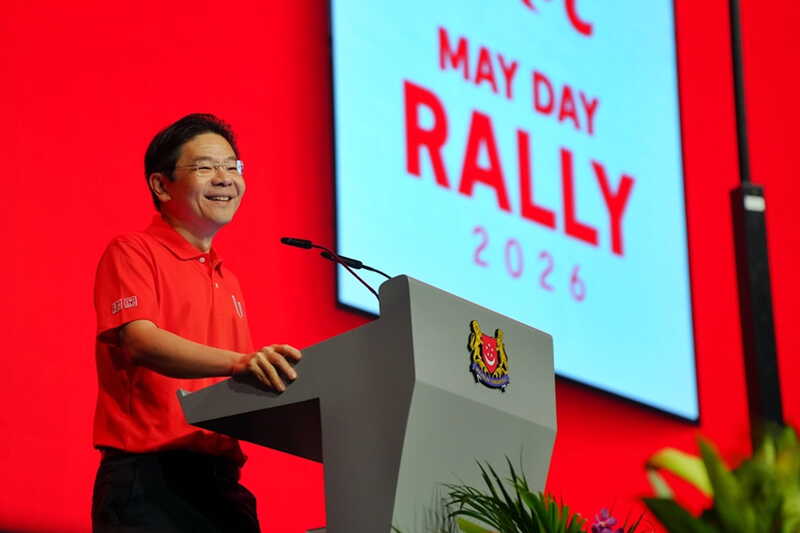
Image Source: NTUC Website
Singapore's May Day Rally is never just a celebration - it is a policy signal. On 1 May 2026, Prime Minister Lawrence Wong addressed more than 1,600 union leaders and tripartite partners at Downtown East with a speech that was part economic warning, part strategic roadmap, and part direct call to action for employers.
Two Storms, One Workforce
PM Wong framed Singapore's current environment around two concurrent crises. The first is the Middle East conflict and the closure of the Strait of Hormuz, which has disrupted energy and supply chains across Asia for more than two months. The International Energy Agency has warned this could prove more severe than the 1970s oil shocks, with stagflation risks - stagnation plus inflation - rising globally. Singapore's growth will slow, and inflation will be higher this year.
The second is AI. PM Wong cited Google as a live example: AI-generated code went from 25% of output two years ago to 75% today. Software engineers are not disappearing - but their roles are fundamentally changing. For employers, both storms have direct workforce implications. The question is not whether to respond, but how quickly.
What the Government Is Asking of Employers
PM Wong made a specific appeal to businesses: step up to support your workers. He cited NTUC FairPrice's decision to freeze prices on essentials as a model. For hiring managers, this translates into three concrete areas.
Workforce stability over reactive cost-cutting. Reeracoen's Hiring Manager Survey 2025/2026, which surveyed 375 Singapore-based hiring managers, found early signs of cautious retrenchment due to AI and cost controls already emerging in 2026. Employers who maintain strategic hiring through uncertainty consistently emerge with stronger teams.
Engagement with the CTC framework. The Company Training Committee network now covers more than 3,800 committees and over 300,000 workers. It is a funded, structured pathway to upskill staff - and the newly announced Tripartite Jobs Council (TJC) will expand its reach, focusing on building AI-ready workers, enabling better businesses, and improving job matching.
Preparing for the new Skills and Workforce Development Agency. The merger of SkillsFuture Singapore and Workforce Singapore into a single agency is the most significant structural change from the Rally. For employers, it means simplified access to grants, clearer CTC pathways, and a more coordinated talent development system. If you have not yet engaged with either agency, this is the natural entry point.
What Reeracoen's Data Is Showing on the Ground
Reeracoen's Hiring Pulse Q1 2026 shows hiring demand remaining stable in the near term - but disciplined. Replacement hiring dominates. Expansion hiring is being approved more selectively. Our Hiring Manager Survey found 80.3% of employers cite salary expectations as a top hiring challenge, while 71.8% of candidates are actively job searching. That gap is a structural tension that strategic employers can exploit.
Sector demand remains resilient. Our BFSF Talent Outlook 2026 shows steady hiring in governance, compliance, engineering, and banking and financial services - structural shortages that will not ease regardless of macro headwinds.
Five Actions to Take Now
- Audit AI readiness. Assess which roles are most exposed to automation and what an augmented version of each looks like. Jobs Transformation Maps are a useful starting point.
- Review CTC participation. If your company is not yet engaged with NTUC e2i or NTUC LearningHub, the CTC Grant funds exactly this kind of transformation work.
- Benchmark compensation. Reeracoen's Salary Guide 2025/2026 provides sector-level data to keep your packages competitive in a tighter market.
- Signal stability internally. Our Beyond the Paycheque Employee Sentiment Study 2026 found employee decisions in 2026 are increasingly shaped by job security perceptions. Proactive communication is a retention tool.
- Move early on specialist talent. Secure bilingual and specialist hires - particularly in tech, compliance, and Japanese-English roles - before competition intensifies in H2.
PM Wong was clear: the government will protect every worker, but not every job. Workforce resilience is a shared responsibility - and the infrastructure to build it is better funded and more coordinated than at any point in Singapore's history.
FAQS
Frequently Asked Questions
What did PM Wong's May Day 2026 speech mean for employers in Singapore?
PM Wong called on businesses to actively support their workers through two concurrent crises: the Middle East energy disruption and the accelerating pace of AI transformation. Key announcements include the formation of the Tripartite Jobs Council and the merger of SkillsFuture Singapore and Workforce Singapore into a new Skills and Workforce Development Agency - both of which have direct implications for employer workforce planning and training obligations.
What is the Tripartite Jobs Council and how does it affect hiring?
The Tripartite Jobs Council (TJC) was launched at the May Day Rally 2026 to coordinate government, union, and employer efforts on AI-era workforce transformation. It focuses on building AI-ready workers, creating better jobs, and improving job matching. Employers can expect expanded CTC grant support and more structured pathways to access training and transformation funding through the TJC framework.
Should employers in Singapore pause hiring given the economic uncertainty?
Reeracoen's Q1 2026 Hiring Pulse data suggests maintaining disciplined rather than defensive hiring is the more effective strategy. Structural talent shortages in tech, compliance, and specialist roles persist regardless of macro conditions. Employers who pause entirely risk losing ground when conditions stabilise, while those who hire strategically tend to emerge stronger.
What is the new Skills and Workforce Development Agency?
The new Skills and Workforce Development Agency is the result of the merger of SkillsFuture Singapore and Workforce Singapore, announced by PM Wong at the May Day Rally 2026. It is intended to consolidate training and employment support under one roof, making it easier for employers and workers to access upskilling grants, career coaching, and transformation support.
CTA SECTION
Working Out Your Next Hiring Move?
Whether you are navigating headcount decisions in an uncertain market or planning your AI-era workforce strategy, Reeracoen's specialist consultants can help you benchmark, plan, and hire with confidence.
[Talk to a Reeracoen Consultant]
[Download the Reeracoen Singapore Salary Guide 2025/2026]
ABOUT THE AUTHOR
Valerie Ong | Regional Marketing Manager, Reeracoen Group
Valerie leads content and market insights for Reeracoen across Asia. She works closely with Reeracoen's specialist recruitment consultants to translate hiring data, salary benchmarks and labour market trends into practical guidance for Singapore's employers and professionals. Her work draws on Reeracoen's proprietary research including the annual Salary Guide, Hiring Pulse, and Hiring Manager Survey.
Language note: This article is published in English. Reeracoen Singapore also publishes selected content in Japanese and Mandarin for our bilingual and Japanese-speaking professional community.
RELATED ARTICLES
You May Also Find These Useful
2. Singapore Hiring Trends 2026: What 375 Hiring Managers Told Us About the Future of Talent
3. Singapore Budget 2026: A Turning Point for Hiring, AI and Workforce Transformation
REFERENCES
- Prime Minister's Office Singapore - PM Lawrence Wong at May Day Rally 2026
- NTUC - May Day Rally 2026: Labour Movement Commitments and Announcements
- Mothership - Every Singapore Worker Will Be Protected in AI Revolution: PM Wong at May Day Rally
- Reeracoen Singapore Hiring Manager Survey 2025/2026
- Reeracoen Hiring Pulse Q1 2026
- Reeracoen Beyond the Paycheque: Singapore Employee Sentiment Study 2026
- Reeracoen Singapore BFSF Talent Outlook 2026
- Reeracoen Singapore Salary Guide 2025/2026

Disclaimer:
The information provided in our blog articles is intended for general informational purposes only. It is not a substitute for professional advice and should not be relied upon as such.
While we strive to provide accurate and up-to-date information, the ever-evolving nature of certain topics may result in content becoming outdated or inaccurate over time. Therefore, we recommend consulting with qualified professionals or experts in the respective fields for specific advice or guidance. Any actions taken based on the information contained in our blog articles are solely at the reader's discretion and risk. We do not assume any responsibility or liability for any loss, damage, or adverse consequences incurred as a result of such actions.
We may occasionally provide links to external websites or resources for further information or reference. These links are provided for convenience and do not imply endorsement or responsibility for the content or accuracy of these external sources. Our blog articles may also include personal opinions, views, or interpretations of the authors, which do not necessarily reflect the views of our organisation as a whole. We encourage readers to verify the accuracy and relevance of information presented in our blog articles and to seek professional advice when needed. Your use of this website and its content constitutes acceptance of this disclaimer.
Related Post
 The Fed Raised Rates: What Singapore Employers Should Watch in Hiring and Workforce CostsManagement
The US Federal Reserve's decision to raise interest rates by 25 basis points on 16 September 2026, its first hike since 2023, has prompted plenty...
 AI Is Changing How Work Gets Done: How Singapore Employers Should Plan Their WorkforceManagement
AI is changing how work gets done across Singapore businesses. Regional research from Reeracoen and Rakuten Insight finds Singapore businesses...
 Employers Say They Can't Find the Right Talent. Are They Screening Out Good Candidates Too Early?Management
Most Singapore employers will tell you they're struggling to find the right talent. But the same research raises another question: could some...
 Singapore Grand Prix 2026: Which Industries and Jobs Benefit When F1 Comes to Town?Management
Formula 1 returns to Marina Bay Street Circuit for the 2026 Singapore Grand Prix from 9 to 11 October, with the wider Grand Prix Season Singapore...