The Fed Raised Rates: What Singapore Employers Should Watch in Hiring and Workforce Costs

The US Federal Reserve's decision to raise interest rates by 25 basis points on 16 September 2026, its first hike since 2023, has prompted plenty of commentary about what it means for businesses in Singapore. Most of that commentary, examined closely, describes indirect and gradual effects rather than immediate ones. For Singapore employers, the useful response isn't to assume a direct impact on hiring or workforce costs, but to understand the specific channels worth monitoring over the coming quarter.
What the decision actually was
The Federal Open Market Committee voted unanimously to raise the federal funds target range to 3.75% to 4.00%, citing continued economic expansion alongside elevated inflation. It was a widely watched move: the hike had been largely priced in by markets by the time of the decision, while the Fed's updated policy outlook reinforced expectations that rates could remain higher for longer.
The channel that actually connects to Singapore
Singapore does not set an independent policy interest rate; the Monetary Authority of Singapore manages monetary policy through the Singapore dollar's exchange rate against a basket of currencies. The mechanism worth watching is the Singapore Overnight Rate Average, or SORA, the local benchmark used to price many floating-rate business loans and credit facilities in Singapore. Following the Fed's decision, Singapore commentary noted that the hike could put some upward pressure on SORA and floating borrowing costs, although the transmission is neither immediate nor one-to-one. Because the three-month compounded SORA rate incorporates the preceding three months of data, any adjustment shows up with a lag, not immediately.
What this could mean for workforce costs, cautiously
Financing costs for growth and headcount plans may face gradual upward pressure. Businesses relying on floating-rate credit facilities to fund expansion, including hiring plans tied to growth initiatives, may see financing costs drift higher over coming months. This is a planning input, not a reason to pause hiring outright.
Fixed-rate loan holders are largely insulated in the near term. For businesses on fixed-rate financing, the Fed's move has limited near-term relevance to existing obligations, though it may influence the rates offered on new fixed-rate packages going forward.
Currency and import-cost effects are worth watching for cost-sensitive sectors. Businesses with significant imported input costs, or those competing on price with overseas suppliers, may see some effect through currency movements, a channel that touches operating costs more directly than workforce costs specifically.
What employers should not assume
It's worth being direct about the limits of this connection. A single US rate decision does not, on its own, provide a reliable basis for forecasting Singapore hiring conditions, wage growth, or workforce demand over the coming quarter. Singapore's own labour market data, sector-specific hiring trends, and MAS's exchange-rate policy settings are far more directly relevant to workforce planning than a US rate announcement. Treating this decision as a signal to freeze hiring, or conversely as a reason to accelerate it, would be reading more into a single data point than the evidence supports.
A practical approach for Q4 workforce planning
Rather than reacting to the rate decision itself, employers are better served reviewing their own financing structure: knowing whether key credit facilities are fixed or floating, and building a modest buffer into Q4 and 2027 budget planning for the possibility of gradually rising borrowing costs, is a more useful response than trying to predict how a single Fed decision will ripple through Singapore's economy. Workforce decisions, including where scarce headcount should go this quarter, should continue to be driven primarily by business need and local hiring conditions, not US monetary policy.
Frequently asked questions
How does the US Fed's rate decision affect Singapore businesses?
The clearest channel is through the Singapore Overnight Rate Average (SORA), which prices many floating-rate business loans and tends to respond to global rate changes gradually, over a period of months, rather than immediately.
Should Singapore employers change their hiring plans because of the Fed's rate hike?
Not on the basis of the rate decision alone. Singapore's own labour market conditions and sector-specific hiring demand are far more directly relevant to workforce planning than a single US rate announcement, which affects Singapore's economy only indirectly.
Are fixed-rate business loans affected by the Fed's decision?
Existing fixed-rate obligations are largely insulated in the near term. The Fed's decision may influence rates offered on new fixed-rate packages going forward, but does not change agreed terms on current facilities.
What should employers actually monitor after a Fed rate decision?
Reviewing whether existing credit facilities are fixed or floating, and building modest flexibility into budget planning for potentially higher financing costs over coming months, is a more useful response than trying to predict hiring or wage effects directly from the rate decision.
Take the next step
If your business is reviewing Q4 and 2027 workforce budgets alongside financing conditions, speak to a Reeracoen consultant about where your hiring investment will work hardest.
If you're a professional wanting to understand how broader economic conditions relate to your own career planning, register with Reeracoen to speak with a consultant about current hiring trends in your sector.
Related articles
- Singapore's Labour Market in Q2 2026: Growth, Restructuring, and Why Selective Hiring Isn't the Same as a Slowdown
- How Employers Should Read the MOM Opportunity Index in 2026
- Mid-Year Workforce Planning in Singapore: How to Build a Hiring Strategy That Holds Up in H2 2026
About the Author
Valerie Ong, Regional Head of Marketing, Reeracoen Group. Valerie leads content and market insights for Reeracoen across Asia. She works closely with Reeracoen's specialist recruitment consultants to translate hiring data, salary benchmarks and labour market trends into practical guidance for Singapore's employers and professionals. Her work draws on Reeracoen's proprietary research including the annual Salary Guide, Hiring Pulse, and Hiring Manager Survey.
This article is published in English. Reeracoen Singapore also publishes selected content in Chinese and Japanese for our bilingual and Japanese-speaking professional community.
References
● Board of Governors of the Federal Reserve System, FOMC statement, 16 September 2026
● The Straits Times, reporting on SORA and Singapore rate transmission following the September 2026 Fed decision
● CNA, "Will Singapore home loan rates rise after the Fed's rate hike?" (September 2026)

Disclaimer:
The information provided in our blog articles is intended for general informational purposes only. It is not a substitute for professional advice and should not be relied upon as such.
While we strive to provide accurate and up-to-date information, the ever-evolving nature of certain topics may result in content becoming outdated or inaccurate over time. Therefore, we recommend consulting with qualified professionals or experts in the respective fields for specific advice or guidance. Any actions taken based on the information contained in our blog articles are solely at the reader's discretion and risk. We do not assume any responsibility or liability for any loss, damage, or adverse consequences incurred as a result of such actions.
We may occasionally provide links to external websites or resources for further information or reference. These links are provided for convenience and do not imply endorsement or responsibility for the content or accuracy of these external sources. Our blog articles may also include personal opinions, views, or interpretations of the authors, which do not necessarily reflect the views of our organisation as a whole. We encourage readers to verify the accuracy and relevance of information presented in our blog articles and to seek professional advice when needed. Your use of this website and its content constitutes acceptance of this disclaimer.
Related Post
 AI Is Changing How Work Gets Done: How Singapore Employers Should Plan Their WorkforceManagement
AI is changing how work gets done across Singapore businesses. Regional research from Reeracoen and Rakuten Insight finds Singapore businesses...
 Employers Say They Can't Find the Right Talent. Are They Screening Out Good Candidates Too Early?Management
Most Singapore employers will tell you they're struggling to find the right talent. But the same research raises another question: could some...
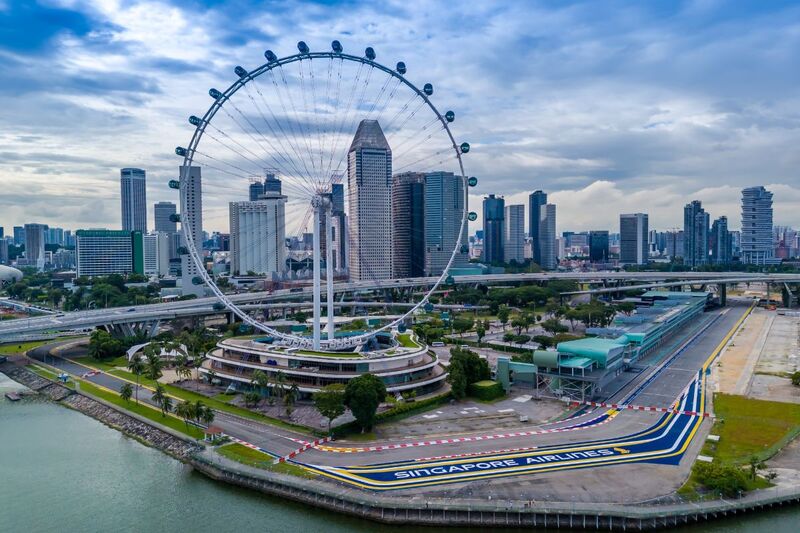 Singapore Grand Prix 2026: Which Industries and Jobs Benefit When F1 Comes to Town?Management
Formula 1 returns to Marina Bay Street Circuit for the 2026 Singapore Grand Prix from 9 to 11 October, with the wider Grand Prix Season Singapore...
 Why Are Singapore Employers Still Struggling to Hire When More People Are Looking for Jobs?Management
It's a combination that shouldn't make sense on paper: a large share of Singapore's workforce is actively looking for a new role, and yet Singapore...