Singapore's 61st Birthday: What the Values That Built This Economy Ask of Employers Today
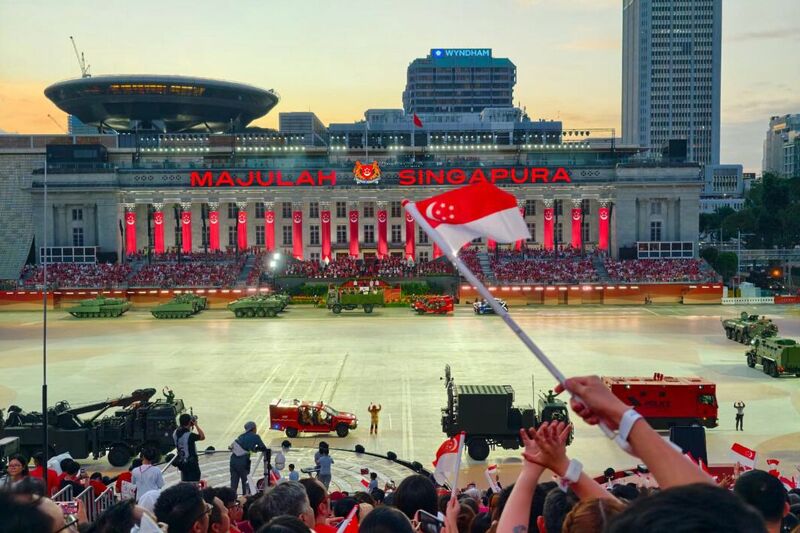
Singapore turns 61 this National Day. The anniversary marks something specific: the distance between the country as it was at independence and the country as it is now. At independence, Singapore had limited natural resources, a fragile economy, and a workforce that had to be built from almost nothing. The values that drove what followed, meritocracy, multiracialism, a strong social compact between government, employers, and workers, were not rhetoric. They were operating principles that produced measurable outcomes.
For employers, National Day is worth taking seriously not as a ceremonial occasion but as a prompt. Those founding values did not stop being relevant when Singapore became wealthy. They became harder to maintain. Here are three of them, and what each genuinely requires in 2026.
Meritocracy: What It Actually Demands From Employers
Singapore's founding meritocracy was radical in its original context. In a new nation with deep ethnic, linguistic, and religious divisions, it was a deliberate policy choice to advance people based on competence rather than background. It was not a soft aspiration. It was a hard structural commitment backed by institutional design.
In 2026, meritocracy as an employer commitment requires something more demanding than simply following the hiring rules. It requires being honest about where bias still operates within an organisation, even where it is unintentional. It requires asking not just whether the best person was hired, but whether the pool from which they were chosen was genuinely open.
“Talent is equally distributed. Opportunity is not.”
— A principle often cited by Singapore's founding generation and still operationally relevant for employers in 2026.
Two specific questions worth asking before each hiring decision: Are the qualifications we require for this role actually necessary for the role, or have they accumulated over time as proxies for a kind of candidate we are accustomed to seeing? And are we applying the same standard of evidence to candidates from different backgrounds, or are we asking some to prove more than others?
Multiracialism: From Compliance to Practice
Singapore's multiracialism is legally underpinned. The Tripartite Guidelines on Fair Employment Practices set out what employers cannot do, and the Workplace Fairness Act, which has passed Parliament and is expected to take full effect by end-2027, will give legal force to those standards across five protected characteristics including race, religion, and language ability.
But the difference between compliance and genuine multiracial practice is visible to anyone who works inside an organisation. Compliance means you do not discriminate in formal hiring decisions. Practice means your senior leadership, your mentoring relationships, your informal networks, and your social fabric at work actually reflect the diversity that Singapore's workforce contains.
In a country where the majority-minority balance shifts depending on the room you are in, and where four official languages operate alongside dozens of others in daily life, an employer who treats multiracialism as a legal minimum rather than an active commitment tends to show it, over time, in who gets promoted, who is trusted with regional scope, and who stays.
The Social Compact: What It Means When the Economy Is Under Pressure
Singapore's social compact between government, employers, and workers was most visibly tested during downturns. The tripartite framework, bringing unions, the government, and employer associations together to navigate economic shocks, was designed precisely for moments when the pressure to cut wages, reduce headcount, or abandon longer-term commitments is highest.
In 2026, that compact is under a different kind of pressure. Not a single sharp crisis, but a sustained combination of AI-driven displacement uncertainty, moderating wage growth, and a workforce that has become significantly more informed about its own market value. The compact holds when employers are transparent about what is actually happening in the business, and honest with their people about what it means for them.
That is a harder thing to do than it sounds. Transparency about uncertainty is uncomfortable. But the alternative, a workforce that fills the information vacuum with speculation, job search activity, and the assumption that leadership is managing its own interests rather than theirs, is a more expensive outcome for the business.
Source: MOM Q1 2026 Labour Market Report; Reeracoen Hiring Pulse, March 2026 edition.
Three Questions Worth Taking Into H2 2026
Not a compliance checklist. A genuine reflection:
- When did you last audit whether your formal commitment to meritocracy is visible in outcomes, not just in process? If your senior team, your highest performers, and your mentoring relationships all look similar in ways that cannot be explained by the available talent, that is a signal worth taking seriously.
- Are there any informal practices in your organisation, around language, network access, or cultural expectations, that disadvantage employees who do not belong to the dominant cultural group in your workplace? These do not have to be intentional to matter.
- When your employees are uncertain about the future of their role, or the business, do they hear from you directly and honestly? Or do they find out through rumour? The social compact is maintained or broken in ordinary moments, not just in declared crises.
Singapore's 61st birthday is a reasonable moment for employers to ask whether the values that made the economy worth working in are the ones operating inside their own organisations. Not as a compliance exercise, but as a genuine leadership question.
Frequently Asked Questions
When is Singapore National Day 2026?
9 August 2026, marking Singapore's 61st anniversary of independence. This article is published on Thursday 6 August, the nearest cadence slot before the public holiday.
What is the Workplace Fairness Act and when does it take effect?
Singapore's Workplace Fairness Act has passed Parliament in two bills (January 2025 and November 2025) and is expected to take full legal effect by end-2027. It covers five protected characteristics including race, religion, and language ability.
What is the tripartite model in Singapore?
Singapore's tripartite framework brings the government, employer associations (primarily the Singapore National Employers Federation), and the labour movement (NTUC) together to address workforce and industrial relations issues. It has been a structural feature of Singapore's economic management since the 1970s.
Is meritocracy still a practical operating principle for Singapore employers?
Yes, but maintaining it requires active design rather than passive assumption. Meritocracy does not sustain itself automatically; it requires deliberate audit of where informal preferences or structural biases are producing outcomes that the formal process would not endorse.
Get in Touch
Looking to strengthen your hiring practices or employer value proposition heading into H2 2026? Talk to a Reeracoen consultant about your talent strategy.
Hiring for roles where diversity of background and language is a genuine advantage? Get in touch with Reeracoen Singapore.
Related Articles
- Racial Harmony Day 2026: How Singapore Jobseekers Can Spot Genuinely Inclusive Employers
- Workplace Fairness in Singapore: What Inclusive Hiring Looks Like in 2026
About the Author
Valerie Ong
Regional Marketing Manager, Reeracoen Group
Valerie leads content and market insights for Reeracoen across Southeast Asia. She works closely with Reeracoen's specialist recruitment consultants to translate hiring data, salary benchmarks and labour market trends into practical guidance for Singapore's employers and professionals. Her work draws on Reeracoen's proprietary research including the annual Salary Guide, Hiring Pulse, and Hiring Manager Survey.
Language note: This article is published in English. Reeracoen Singapore also publishes selected content in Japanese for our bilingual and Japanese-speaking professional community.
References
- Ministry of Manpower, Singapore. Tripartite Guidelines on Fair Employment Practices. https://www.mom.gov.sg/
- Tripartite Alliance for Fair and Progressive Employment Practices (TAFEP). Workplace Fairness. https://www.tal.sg/tafep/

Disclaimer
This article provides a values-based employer reflection and references Singapore's legal and policy framework on fair employment. It does not constitute legal or HR advice. Employers with specific compliance questions should refer directly to MOM or TAFEP.
Related Post
 Singapore's 2026 Hiring Paradox: Why Even Growing Businesses Are Still Hiring SelectivelyManagement
The Story Behind the Survey Improving revenue is usually read as a green light to hire. In Singapore, the 2026 data tells a more careful story....
 ASEAN Is Growing Without a Hiring Boom: What Singapore Employers Need to Know in 2026Management
The Story Behind the Survey Across Southeast Asia, businesses are entering a new phase of growth. But growth is no longer translating automatically...
 End of Q3 2026: A Talent Review Checklist for Singapore Employers Before Q4 BeginsManagement
Q4 headcount decisions in Singapore typically get made in October and November. The employers who go into those conversations with a clear,...
 Singapore's BFSF Governance and Compliance Hiring Gap: What the 2026 Talent Outlook RevealsManagement
Singapore's banking, financial services, and fintech sector enters H2 2026 with what the Reeracoen BFSF Talent Outlook 2026 describes as 'sustained...