PM Lawrence Wong’s AI Vision: What a ‘People-First’ Approach Means for Singapore’s Workforce
This article is written in English for readers in Singapore. Chinese and Japanese translations are available on our website.
Singapore’s New AI Vision — Beyond Technology, It’s About People
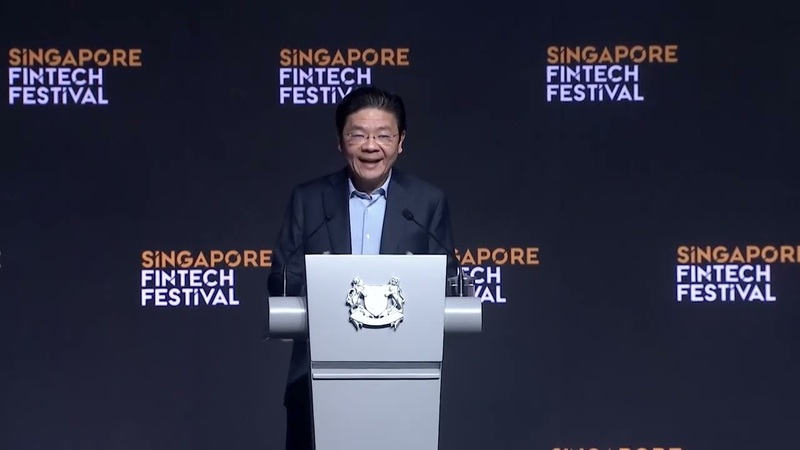
At the Singapore FinTech Festival 2025 and during the National AI Strategy 2.0 update, Prime Minister Lawrence Wong reiterated that Singapore’s success in artificial intelligence will depend not just on data or compute power — but on people.
His “People-First AI Vision” calls for a national approach that ensures AI innovation creates opportunity, not inequality.
Key focuses include upskilling every worker, strengthening digital trust, and fostering collaboration between humans and intelligent systems.
This marks Singapore’s shift from “AI for Efficiency” to “AI for Empowerment” — making it essential for employers and professionals to understand what that means for the 2026 workforce.
1️⃣ From Automation to Augmentation
PM Wong emphasised that AI should complement, not replace, human capability.
Under the new framework, government agencies and SkillsFuture Singapore will co-develop training roadmaps so that AI tools enhance roles — from finance and healthcare to manufacturing and recruitment.
💡 Implication for HR:
Companies must audit workflows and identify where AI can assist decision-making, not eliminate roles. Building AI literacy across teams will help maintain job confidence and innovation readiness.
2️⃣ Upskilling 2.0: A Whole-of-Society Effort
The National AI Strategy 2.0 (NAIS 2.0) introduces a “Digital Skills for All” roadmap, integrating AI fundamentals into adult education and workplace training.
It extends SkillsFuture credits and encourages employers to fund AI micro-learning, data ethics, and prompt-engineering courses.
💡 Implication for professionals:
Future career mobility will depend on adaptability and continuous learning, not just technical expertise.
💡 Implication for companies:
Budget for structured learning hours, mentorship, and AI literacy programmes for non-tech roles by 2026.
3️⃣Building Digital Trust and Responsible AI
PM Wong’s speech underscored Singapore’s role as a trusted global AI hub, with the Model AI Governance Framework (2025 update) reinforcing fairness, transparency, and accountability.
💡 Implication for employers:
Adopt ethical-AI practices — document model decisions, train staff on data privacy, and use AI only where governance standards are clear.
💡 Implication for HR:
Establish an internal AI-use policy that covers hiring, performance evaluation, and employee data handling.
4️⃣Human-Centric Design in the Workplace
Singapore’s AI policy ties innovation to worker well-being and inclusivity.
AI will be deployed to reduce routine workload, improve workplace safety, and personalise career development pathways — not just to boost profits.
💡 Implication for business leaders:
Measure success through both productivity and people outcomes — retention, satisfaction, and skill growth.
💡 Implication for employees:
View AI as a co-pilot that enhances creativity, not a competitor.
5️⃣ Global Collaboration, Local Opportunity
NAIS 2.0 also strengthens international partnerships — from the AI Verify Foundation to regional talent exchanges — positioning Singapore as a hub for AI governance and applied research.
💡 Implication for companies:
Expect more cross-border projects requiring bilingual, tech-literate, and compliance-savvy professionals.
💡 Implication for jobseekers:
AI fluency plus cultural intelligence will define competitiveness in global teams.
How Reeracoen Supports a People-First AI Workforce
At Reeracoen Singapore, we help clients and candidates prepare for Singapore’s AI-powered future through:
- Skills-based hiring frameworks that identify human potential beyond technical credentials
- AI-ready talent matching tools aligned with ethical-use principles
- Upskilling advisory connecting employers with SkillsFuture and digital-skills partners
- Market insights from the Reeracoen × Rakuten Insight APAC Workforce Whitepaper 2025
Our mission is to empower people — because technology works best when people thrive first.
💡 FAQ — Singapore’s AI Policy & Workforce Implications
Q1. What is Singapore’s latest AI policy about?
The National AI Strategy 2.0 (2025) focuses on using AI responsibly to raise productivity, protect jobs, and expand learning opportunities for all.
Q2. How does “People-First AI” differ from earlier initiatives?
It shifts focus from automating tasks to augmenting human capability, emphasising trust, inclusion, and fairness.
Q3. Which sectors will see the biggest changes?
Finance, healthcare, manufacturing, education, and recruitment — all adopting AI to enhance accuracy, efficiency, and experience.
Q4. How can companies get started?
Begin with internal AI literacy training, small-scale pilots, and governance frameworks before scaling up transformation programmes.
💼 For Employers: Consult Reeracoen on AI-Driven Workforce Planning
👩💼 For Jobseekers: Explore AI-Enabled Career Paths in Singapore
✅ Final Author Credit
By Valerie Ong (Regional Marketing Manager)
Published by Reeracoen Singapore — a leading recruitment agency in APAC.
🔗 Related Articles
- [From IQ to AQ: Building Adaptability in 2026 Teams]
- [Navigating Economic and Tech Signals in 2025: What Singapore’s Job Market in AI, Data, and Finance Reveals]
- [Upskilling in the Age of AI & Green Jobs: Why Singapore Must Prepare Now]
📚 References
- Prime Minister Lawrence Wong’s keynote at Singapore FinTech Festival 2025 – People-First AI Vision (Prime Minister’s Office, Nov 2025)
- National AI Strategy 2.0 (NAIS 2.0) – Smart Nation and Digital Government Office (SNDGO)
- SkillsFuture Singapore – Digital Skills for All Framework 2025
- Model AI Governance Framework (Third Edition, Infocomm Media Development Authority – IMDA, 2025)
- Reeracoen × Rakuten Insight APAC Workforce Whitepaper 2025

Disclaimer:
The information provided in our blog articles is intended for general informational purposes only. It is not a substitute for professional advice and should not be relied upon as such.
While we strive to provide accurate and up-to-date information, the ever-evolving nature of certain topics may result in content becoming outdated or inaccurate over time. Therefore, we recommend consulting with qualified professionals or experts in the respective fields for specific advice or guidance. Any actions taken based on the information contained in our blog articles are solely at the reader's discretion and risk. We do not assume any responsibility or liability for any loss, damage, or adverse consequences incurred as a result of such actions.
We may occasionally provide links to external websites or resources for further information or reference. These links are provided for convenience and do not imply endorsement or responsibility for the content or accuracy of these external sources. Our blog articles may also include personal opinions, views, or interpretations of the authors, which do not necessarily reflect the views of our organisation as a whole. We encourage readers to verify the accuracy and relevance of information presented in our blog articles and to seek professional advice when needed. Your use of this website and its content constitutes acceptance of this disclaimer.
Related Post
 Singapore Has 68,600 Job Vacancies. So Why Is It Taking Longer to Find a Job?General
Singapore had 68,600 job vacancies in June 2026 and overall unemployment of just 1.9 percent. On paper, that looks like good news for anyone job...
 「I’m Here for You」―Reeracoen Wayが言葉を超えたときGeneral
フィリピンの、とある子どもたちが多く暮らす施設で、聞き慣れたメッセージが流れ始めました。 「I’m Here for You」 2026年8月、Reeracoen Singaporeのブランチマネージャー・須長が、Christian Mission Service Philippines...
- “我在你身边”:Reeracoen之道超越文字的时刻General
在菲律宾的一个儿童村,距离Reeracoen遍布亚洲的各个办公室很远的地方,一段熟悉的旋律开始响起。 “我在你身边。” 这一次,它不是写在演示文稿上,也不是在会议中说出的。 Reeracoen新加坡分公司经理砂贺正一(Shoichi...
- “I’m Here for You”: When the Reeracoen Way Became More Than WordsGeneral
In a children’s village in the Philippines, far from Reeracoen’s offices across Asia, a familiar message began to play. “I’m Here for You.” This...