Singapore Grand Prix 2026: Which Industries and Jobs Benefit When F1 Comes to Town?
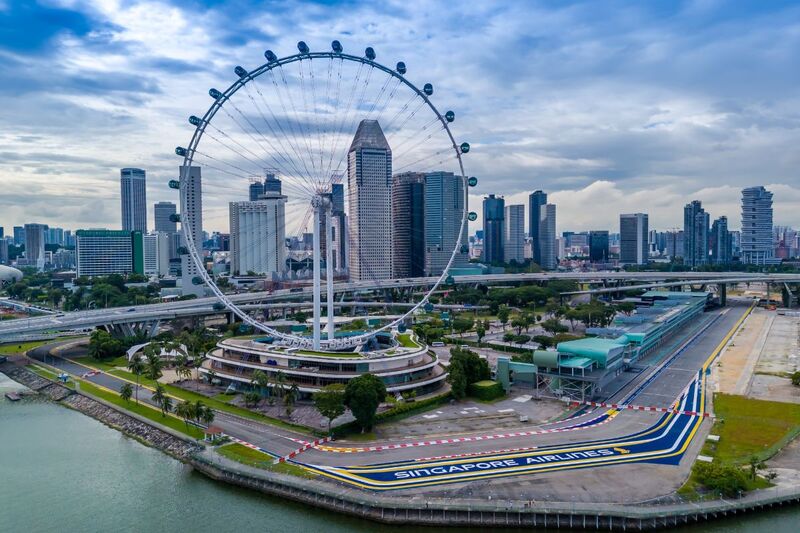
Formula 1 returns to Marina Bay Street Circuit for the 2026 Singapore Grand Prix from 9 to 11 October, with the wider Grand Prix Season Singapore running from 2 to 11 October. Beyond the spectacle, the race generates a real, measurable spike in workforce demand across a specific set of Singapore industries. For employers in those sectors, understanding the shape of that demand, rather than the event itself, is what matters for planning.
The scale of the workforce demand behind the race
According to the Singapore Tourism Board, around 30,000 staff, contractors and stakeholders are accredited to work at Marina Bay Street Circuit each year, spanning event operations, hospitality and race-day support roles. STB also reports that 90% of the race's organisation is sub-contracted annually to Singapore-based companies, and that since the race's 2008 debut it has attracted more than 720,000 international visitors and generated over S$2.2 billion in incremental tourism receipts across hospitality, food and beverage, attractions and retail. Hundreds of Singapore-based companies support the race each year.
This is not a one-week phenomenon confined to the circuit itself. The Ministry of Trade and Industry has noted that Singapore GP Pte Ltd and government agencies work with businesses across the wider Marina Bay area, and that Grand Prix Season Singapore runs ten days of stakeholder-led festivities specifically designed to extend the event's commercial reach into retail, dining and entertainment beyond race weekend itself.
Which industries feel the demand
Hospitality and accommodation. Hotels and hospitality businesses can experience increased visitor demand around race week, supporting short-term demand for front-of-house, housekeeping and guest-experience roles.
Food and beverage. Race-week footfall lifts demand for F&B staffing across the Marina Bay precinct and beyond, from casual dining to premium hospitality packages tied to the event.
Events, production and logistics. Circuit build and teardown, stage and grandstand construction, and the broader event production supply chain require a large temporary workforce with specific technical and safety certifications.
Security and crowd management. Accredited security and crowd-management personnel are among the roles required to support a major event of this scale.
Retail and attractions. Businesses in the Marina Bay area and across participating GPSS venues can benefit from increased visitor activity during the event period, supporting short-term retail and customer-facing roles.
What this means for employers, even outside these sectors
If your business isn't directly in one of these industries, the F1 period still has two practical implications worth planning for. First, if you compete for hourly or shift-based talent with hospitality, events or F&B employers in the Marina Bay area, expect tighter short-term availability and potentially higher wage expectations for casual and part-time roles during race week. Second, if your business sits in or near the Marina Bay precinct, MTI's own engagement with stakeholders confirms that road closures and access changes are a genuine, if temporary, operational consideration, worth factoring into scheduling and client-facing arrangements for the affected days.
For employers in the sectors above, the more useful planning question isn't whether to staff up, but how far in advance. Event-specific accreditation, training and security clearances typically need lead time that outlasts a last-minute hiring push, which makes early workforce planning, rather than reactive hiring in the week itself, the difference between a smooth race week and a scramble.
Frequently asked questions
How many jobs does the Singapore Grand Prix support?
The Singapore Tourism Board reports that around 30,000 staff, contractors and stakeholders are accredited to work at Marina Bay Street Circuit annually, spanning event operations, hospitality and security, with the wider Grand Prix Season Singapore extending demand into retail, dining and entertainment across the city.
Which industries see the biggest hiring impact from F1 in Singapore?
Hospitality and accommodation, food and beverage, events and production, security, and retail and attractions all see a temporary but measurable increase in workforce demand around race week.
Does the Singapore Grand Prix create long-term jobs or only temporary ones?
Most of the direct workforce impact is temporary and tied to race week and its lead-up, though the scale and consistency of the event each year has supported a stable base of specialist event, hospitality and security expertise among Singapore-based companies that are subcontracted annually.
When is the Singapore Grand Prix 2026?
The 2026 race weekend runs from 9 to 11 October, with the broader Grand Prix Season Singapore programme running from 2 to 11 October across the city.
Take the next step
If your business needs to scale up hospitality, events, security or operations staffing around a major event like the Singapore Grand Prix, speak to a Reeracoen consultant about short-term and permanent workforce planning.
If you're looking for event-season or hospitality roles in Singapore, register with Reeracoen to be matched with employers hiring for the season ahead.
Related articles
- Singapore's Labour Market in Q2 2026: Growth, Restructuring, and Why Selective Hiring Isn't the Same as a Slowdown
- Maximising Year-End Hiring Momentum: Why Q4 is Still a Golden Window
About the Author
Valerie Ong, Regional Head of Marketing, Reeracoen Group. Valerie leads content and market insights for Reeracoen across Asia. She works closely with Reeracoen's specialist recruitment consultants to translate hiring data, salary benchmarks and labour market trends into practical guidance for Singapore's employers and professionals. Her work draws on Reeracoen's proprietary research including the annual Salary Guide, Hiring Pulse, and Hiring Manager Survey.
This article is published in English. Reeracoen Singapore also publishes selected content in Chinese and Japanese for our bilingual and Japanese-speaking professional community.
References
● Singapore Tourism Board, official statement on the Formula 1 Singapore Grand Prix hosting agreement to 2028 (accredited workforce and subcontracting figures)
● Ministry of Trade and Industry, Parliamentary written reply on the impact of the F1 Singapore Grand Prix on businesses (14 October 2025; visitor numbers and tourism receipts attributable to the Singapore Grand Prix since 2008)
● Formula 1 official 2026 season calendar, Singapore Grand Prix race weekend dates

Disclaimer:
The information provided in our blog articles is intended for general informational purposes only. It is not a substitute for professional advice and should not be relied upon as such.
While we strive to provide accurate and up-to-date information, the ever-evolving nature of certain topics may result in content becoming outdated or inaccurate over time. Therefore, we recommend consulting with qualified professionals or experts in the respective fields for specific advice or guidance. Any actions taken based on the information contained in our blog articles are solely at the reader's discretion and risk. We do not assume any responsibility or liability for any loss, damage, or adverse consequences incurred as a result of such actions.
We may occasionally provide links to external websites or resources for further information or reference. These links are provided for convenience and do not imply endorsement or responsibility for the content or accuracy of these external sources. Our blog articles may also include personal opinions, views, or interpretations of the authors, which do not necessarily reflect the views of our organisation as a whole. We encourage readers to verify the accuracy and relevance of information presented in our blog articles and to seek professional advice when needed. Your use of this website and its content constitutes acceptance of this disclaimer.
Related Post
 The Fed Raised Rates: What Singapore Employers Should Watch in Hiring and Workforce CostsManagement
The US Federal Reserve's decision to raise interest rates by 25 basis points on 16 September 2026, its first hike since 2023, has prompted plenty...
 AI Is Changing How Work Gets Done: How Singapore Employers Should Plan Their WorkforceManagement
AI is changing how work gets done across Singapore businesses. Regional research from Reeracoen and Rakuten Insight finds Singapore businesses...
 Employers Say They Can't Find the Right Talent. Are They Screening Out Good Candidates Too Early?Management
Most Singapore employers will tell you they're struggling to find the right talent. But the same research raises another question: could some...
 Why Are Singapore Employers Still Struggling to Hire When More People Are Looking for Jobs?Management
It's a combination that shouldn't make sense on paper: a large share of Singapore's workforce is actively looking for a new role, and yet Singapore...