H2 2026 Hiring Outlook: What the Mid-Year Data Tells Singapore Employers About the Rest of the Year

We are at the mid-point of 2026. The June school holidays are winding down, the Class of 2026 is entering the market, and the decisions Singapore employers make in the next six weeks will determine whether their H2 hiring plan succeeds or spends October playing catch-up.
This article draws on Reeracoen’s Singapore hiring cycle data, the Hiring Manager Survey 2025–2026, the Reeracoen Salary Guide 2025–2026 and MOM’s Q1 2026 labour market release to give Singapore employers a clear-eyed view of what H2 holds — and what to do about it.
|
H1 2026 Singapore Labour Market — Mid-Year Data Summary
The headline: Singapore’s labour market is tighter than headline unemployment suggests. Vacancy volumes are high relative to available candidates in key functions, and wage growth is accelerating. H2 will be competitive. |
1. H2 2026 Hiring Demand — Sector by Sector
Demand is not uniform across Singapore’s economy. Here is where the hiring activity will be concentrated in H2 2026, based on current vacancy data, pipeline trends and employer briefings:
|
Sector |
Demand Signal |
Key Roles and Salary Range |
|
Financial Services |
Strong — MAS regulatory pipeline, ESG reporting requirements and APAC hub expansion driving demand |
Finance Manager: SGD 8,000–13,000 | Compliance/Risk: 7,000–12,000 | FP&A Analyst: 6,000–10,000 |
|
Technology |
Very strong — AI implementation, cloud migration, cybersecurity all active |
Data Analyst: 5,500–8,500 | Cloud/DevOps: 6,500–12,000 | Cybersecurity: 6,500–12,000 |
|
Professional Services |
Stable — consulting and advisory demand tracking corporate transformation spend |
Management Consultant: 6,500–12,000 | HR Business Partner: 5,500–9,000 |
|
Manufacturing & Engineering |
Growing — Industry 4.0 investment, green manufacturing and supply chain localisation |
Supply Chain Manager: 6,000–10,500 | Sustainability Engineer: 5,500–9,500 |
|
Life Sciences & Healthcare |
Steady — Singapore biomedical cluster continues expansion post-2025 investment wave |
Clinical Research: 5,000–8,500 | Regulatory Affairs: 5,500–9,000 |
|
Japanese-Affiliated Companies |
Active across all sectors — bilingual talent pipeline constrained, demand persistent |
All functions: +8–30% bilingual premium above base market rate |
2. The Five Talent Risks Singapore Employers Face in H2
Beyond sector demand, these are the structural risks that will shape hiring outcomes in the second half of the year:
|
Risk Factor |
What It Means for Your H2 Hiring |
|
Salary compression |
Mid-level professionals hired in 2022–2023 are now 10–20% below market. Those who know it are looking. Employers who don’t address this proactively will lose people they cannot easily replace. |
|
AI skills premium |
Professionals with applied AI skills command 15–25% above base in most functions. Demand is growing faster than supply. Q3 competition for this pool will be intense. |
|
Bilingual talent scarcity |
Japanese-speaking professionals at N2+ level remain critically short in Singapore. Time-to-hire for these roles is 12–20 weeks. Pipeline investment must start now for Q4 needs. |
|
Graduate cohort absorption |
~11,000 Class of 2026 graduates entering the market creates short-term supply in entry-level roles. Companies that move quickly can secure strong early-career talent before competitors do. |
|
Mid-career attrition wave |
Post-pandemic retention fatigue is real. Reeracoen’s Employee Sentiment data shows 47% of professionals considered a move in the past 12 months. Mid-year review season is the critical retention window. |
3. H2 2026 Salary Pressure by Function
Salary expectations are rising in the functions where demand is highest. Here is the H2 2026 outlook by function, based on Reeracoen’s placement data and the Reeracoen Salary Guide 2025–2026:
|
Function |
Expected H2 Salary Movement |
Driver |
|
Technology (AI/data) |
|
Supply constrained; demand from multiple sectors competing for same pool |
|
Finance (FP&A/Regulatory) |
|
MAS regulatory pipeline and ESG reporting requirements driving sustained demand |
|
Bilingual (Japanese N2+) |
|
Structural shortage; JLPT pipeline slow; employers competing on signing premiums |
|
Engineering (sustainability) |
|
Green jobs growth outpacing available candidate supply |
|
General admin/ops |
|
Supply balanced with demand; AI automation moderating some demand growth |
|
Graduate (entry-level) |
|
Class of 2026 supply partially offsets demand; STEM disciplines remain competitive |
One practical implication: for roles in the high-pressure categories, budget 4–8% above your H1 offer levels. Candidates exploring the market in H2 have anchored expectations at or above current market rates. Offers below market generate rejections, not negotiations.
4. Your H2 2026 Hiring Action Plan
Five priorities, sequenced by when they need to happen:
|
H2 2026 Hiring Action Plan — By Priority |
|
|
Priority 1 July |
Brief your recruitment partner on H2 needs now — not in August when the market is at full pace. Roles that need a September start require a July brief. Time-to-hire for mid-level professionals is 6–12 weeks. |
|
Priority 2 July |
Audit compensation for at-risk employees. If your mid-year reviews revealed below-market salaries, address them before Q3 resignations materialise. An off-cycle adjustment is cheaper than a backfill. |
|
Priority 3 August |
Accelerate graduate onboarding. Class of 2026 hires who start in July–August need structured 90-day plans. Early engagement prevents the 4–6 month attrition spike. |
|
Priority 4 August |
Build AI-skilled capacity. Either develop internally (SkillsFuture AI4I, TeSA) or hire externally. Q4 demand for AI-proficient professionals will be higher than Q3. Act in Q3 to be ready. |
|
Priority 5 Sept–Oct |
Review your Q4 headcount plan. End-of-year hiring pressure arrives in October. Companies that complete their Q4 hiring in September have better candidate quality and lower offer pressure than those who start in November. |
Frequently Asked Questions
Q: When should we start briefing for H2 2026 roles?
A: Now — or at the latest, the first week of July. Average time-to-hire for mid-level professionals in Singapore is 6–12 weeks from brief to offer accepted. Roles needed in September require a July brief. Roles needed in October require an August brief at the very latest. The Q3 market reaches full pace in late July; companies that brief in June and early July consistently get better candidate quality and shorter timelines than those who wait.
Q: Which functions will be hardest to hire for in H2 2026?
A: Technology (AI, data, cloud, cybersecurity), finance (FP&A, risk, regulatory), bilingual Japanese-speaking across all functions, and sustainability/ESG engineering. These are structurally constrained — supply has not kept pace with demand. If you have open roles in these areas, parallel-running a direct search and an agency pipeline is the most effective approach.
Q: How much salary budget should we plan for H2 2026 offers?
A: Plan for 4–8% above your H1 offer levels for technology and bilingual roles, and 2–4% for other functions. Candidates who are actively exploring in H2 are often doing so because their current employer has not addressed market drift — they come with anchored expectations at or above market. Offering below market in H2 generates rejections, not negotiations.
Q: We had three unexpected resignations in Q2. What should we do differently in H2?
A: Three Q2 resignations in the same team is a pattern signal, not a coincidence. Before opening the backfill requisitions, conduct brief exit interviews (if you haven’t) and a retention risk audit of the remaining team. If the departures were salary-driven, address the market gap before the next person leaves. If they were manager or culture-driven, hiring three more people into the same environment will produce three more departures.
Q: Is H2 2026 a good time to hire, or should we wait for the market to soften?
A: Hire when you need to hire. Trying to time the talent market the way you might time a financial market consistently backfires in Singapore’s tightly-supplied professional sector. The candidates available to you today are not the same candidates available in six months. Waiting for a softer market means waiting for lower quality, not lower prices — because the best candidates are always employed and rarely wait.
Brief Now. Hire in H2. Don’t Start in August.
The employers who close the right hires in H2 2026 are the ones who brief their recruitment partners in June and July — not the ones who react when a resignation lands in October. Reeracoen’s Singapore team is available now for H2 planning conversations.
|
Ready to brief for H2? Don’t wait until August. |
Set H2 offers with accurate market data. |
You Might Also Like
▶ Singapore Hiring Trends Q2 2026: What the Data Means for Your Talent Strategy
▶ Mid-Year Appraisals 2026: A Practical Guide for Singapore Managers to Make Reviews Count
▶ End of Q2 2026: A Mid-Year Talent Review Checklist for Singapore Employers
|
About the Author Valerie leads content and market insights for Reeracoen across Southeast Asia. She works closely with Reeracoen's specialist recruitment consultants to translate hiring data, salary benchmarks and labour market trends into practical guidance for Singapore's employers and professionals. Her work draws on Reeracoen's proprietary research including the annual Salary Guide, Hiring Pulse, and Hiring Manager Survey. Language note: This article is published in English. |
References
- Reeracoen Hiring Manager Survey 2025–2026 — Singapore Market Data
- Reeracoen Hiring Pulse April 2026 — Sector and Function Analysis
- Reeracoen Singapore Salary Guide 2025–2026
- Ministry of Manpower Singapore — Labour Market Report Q1 2026
- Ministry of Manpower Singapore — Job Vacancy Statistics March 2026

Disclaimer:
The information provided in our blog articles is intended for general informational purposes only. It is not a substitute for professional advice and should not be relied upon as such.
While we strive to provide accurate and up-to-date information, the ever-evolving nature of certain topics may result in content becoming outdated or inaccurate over time. Therefore, we recommend consulting with qualified professionals or experts in the respective fields for specific advice or guidance. Any actions taken based on the information contained in our blog articles are solely at the reader's discretion and risk. We do not assume any responsibility or liability for any loss, damage, or adverse consequences incurred as a result of such actions.
We may occasionally provide links to external websites or resources for further information or reference. These links are provided for convenience and do not imply endorsement or responsibility for the content or accuracy of these external sources. Our blog articles may also include personal opinions, views, or interpretations of the authors, which do not necessarily reflect the views of our organisation as a whole. We encourage readers to verify the accuracy and relevance of information presented in our blog articles and to seek professional advice when needed. Your use of this website and its content constitutes acceptance of this disclaimer.
Related Post
 The Fed Raised Rates: What Singapore Employers Should Watch in Hiring and Workforce CostsManagement
The US Federal Reserve's decision to raise interest rates by 25 basis points on 16 September 2026, its first hike since 2023, has prompted plenty...
 AI Is Changing How Work Gets Done: How Singapore Employers Should Plan Their WorkforceManagement
AI is changing how work gets done across Singapore businesses. Regional research from Reeracoen and Rakuten Insight finds Singapore businesses...
 Employers Say They Can't Find the Right Talent. Are They Screening Out Good Candidates Too Early?Management
Most Singapore employers will tell you they're struggling to find the right talent. But the same research raises another question: could some...
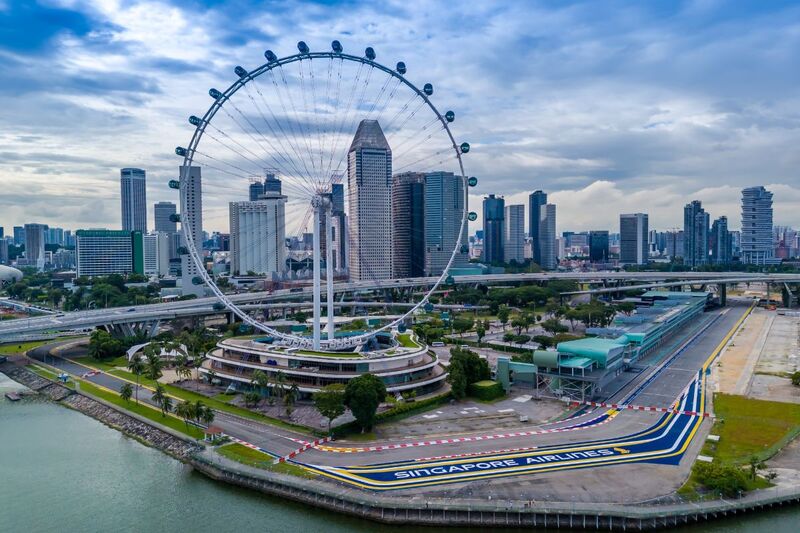 Singapore Grand Prix 2026: Which Industries and Jobs Benefit When F1 Comes to Town?Management
Formula 1 returns to Marina Bay Street Circuit for the 2026 Singapore Grand Prix from 9 to 11 October, with the wider Grand Prix Season Singapore...