When the Next Health Alert Hits, Will Your Business Be Ready? A Practical Guide for Singapore Employers

Singapore has navigated health crises before, and it will again. The question for employers is not whether the next disruption is coming. It is whether your organisation is prepared to absorb it without losing operational momentum, employee trust, or competitive ground.
Recent WHO monitoring advisories around Ebola and Hantavirus, combined with Singapore's MOH strengthening its surveillance measures, have prompted many business leaders to revisit their workforce resilience frameworks. This guide cuts through the noise. It offers practical, actionable steps for Singapore employers who want to be ready.
And the data suggests that readiness is more important than ever. According to Reeracoen's Beyond the Paycheque Singapore Employee Sentiment Study 2026, 32.9% of Singapore employees expect the economy to worsen in 2026, and 21.7% already feel insecure about their jobs. Half of all respondents (50.4%) say they are already preparing financially for uncertainty. Workforce anxiety is a real operating context. How employers respond to disruptions, including health alerts, directly shapes retention and morale.
The Hidden Cost of Being Unprepared
Most Singapore employers have some form of business continuity plan (BCP) in place. But "some form" is not the same as "ready to activate." The COVID-19 period exposed a critical gap: many organisations had documents that had not been reviewed in years, communication trees that were out of date, and remote work arrangements that collapsed under real-world pressure.
The cost of unpreparedness is not just operational. It is reputational and relational. Employees who receive confused or contradictory information during a health alert lose confidence in leadership, and in a tight talent market, that confidence is hard to rebuild. Reeracoen's Hiring Manager Survey 2025/2026, conducted with 375 Singapore-based hiring managers, found that only 23.2% of employers feel very confident in securing qualified local talent. Losing trusted employees to competitors during a disruption is a compounding cost that goes beyond the disruption itself.
What Workforce Resilience Actually Looks Like in 2026
Workforce resilience in 2026 is not about having a thick BCP document. It is about having three things working simultaneously: the operational systems to sustain productivity, the communication capability to manage uncertainty, and the flexibility to adapt quickly.
On the operational side, the key question is whether your workforce can shift between remote and on-site, between functions, or between locations, without significant friction. Reeracoen's Beyond the Paycheque study found that 61.7% of Singapore employees prefer hybrid work arrangements involving some mix of on-site and remote days. Employers who have institutionalised this flexibility as a standard operating model are better positioned to absorb disruptions than those treating it as an exception.
For sectors where remote work is structurally not possible (manufacturing, logistics, F&B, healthcare support), the question shifts to rostering contingency, absenteeism protocols, and safe on-site operating procedures. The flexibility required looks different, but the need for advance planning is identical.
Business Continuity Planning: The Three Non-Negotiables
A practical BCP review for a Singapore employer in 2026 should address three areas as a minimum:
1. Activation clarity. Who makes the call to activate your BCP, under what conditions, and with what authority? Many organisations have a plan but no clear trigger. Define your thresholds: a specific number of reported cases in your workforce, a MOH advisory reaching a certain level, or a government-mandated closure, so the decision to act is pre-made, not debated at the moment.
2. Communication protocol. Employees should hear about a disruption from their employer before they read about it in the news. This requires a pre-approved message template, a defined approval chain that can move in under two hours, and a distribution method that actually reaches your workforce. Email alone is insufficient for many frontline roles.
3. Role flexibility. Know which roles in your organisation are critical, which can be performed remotely, which can be temporarily absorbed by others, and which require a backfill hire. Reeracoen's Q1 2026 Hiring Pulse shows that replacement hiring continues to dominate in Singapore, with employers applying greater scrutiny to expansion roles. Having a clear picture of your critical role map means you can move faster when a gap opens unexpectedly.
Employer Communication During a Health Alert: Getting the Tone Right
When a health advisory surfaces in the media, employees notice. The silence from their employer, or a poorly worded message, can amplify the anxiety far more than the advisory itself.
Effective internal communication during a health alert is about four things: speed, accuracy, calm, and clarity of action. A good message tells employees what is happening, what your organisation is monitoring, what steps are already in place, and what employees should do (or not do) right now. It does not speculate, minimise, or over-reassure.
The Reeracoen Beyond the Paycheque study found that employee decisions in 2026 are increasingly shaped by perceptions of job security and economic confidence. How your leadership communicates during uncertainty is not a soft HR matter. It is a retention strategy.
A Note on the Current Situation
Singapore's MOH has confirmed that the risk to the public from current international health alerts (including WHO monitoring around Ebola and Hantavirus) remains low. Enhanced surveillance is in place at entry points and within the healthcare system.
These alerts are included here not to cause concern, but because they are useful prompts. Every time a health advisory surfaces, the organisations that handle it well are those that prepared before it arrived. The specific disease changes. The need for workforce resilience does not.
What You Can Do This Week
- Pull out your BCP and check whether the contact lists, team structures, and technology references are current
- Confirm your internal communication protocol: who drafts, who approves, how quickly, and through which channels
- Brief your people managers on how to respond calmly and consistently if employees raise concerns
- If remote work policies have not been reviewed since 2022, schedule a review. Not because of any specific threat, but because workforce flexibility is now a talent retention baseline
- For sectors that cannot shift to remote: review your rostering contingency and absenteeism escalation thresholds
Looking to build a more resilient workforce in Singapore?
Whether you are strengthening your workforce planning, reviewing headcount strategy, or building the talent pipeline your business needs to stay resilient, Reeracoen Singapore's specialist consultants are ready to help. Submit an employer enquiry here, or register as a candidate to explore your next opportunity.
Frequently Asked Questions
1. Does Singapore have any confirmed cases of Ebola or Hantavirus?
No. As of the time of writing, MOH has confirmed there are no known cases of either disease in Singapore. Enhanced surveillance and monitoring measures are in place at entry points and within the healthcare system as a precautionary response to WHO advisories. The public health risk to Singapore remains low.
2. What should a Singapore employer's business continuity plan include?
At minimum, a BCP for a Singapore employer should cover: activation criteria and decision authority, an internal communication protocol, remote work or operational contingency arrangements, a critical roles map, and a leave and attendance policy that can flex under disruption conditions. MOM provides guidance on business continuity planning as a starting framework.
3. How do we communicate a health advisory to our employees without causing panic?
The key is speed and calm authority. Issue a brief, factual message as soon as you have confirmed information, ideally before employees encounter media coverage. Reference authoritative sources such as MOH and WHO, confirm what your organisation is already monitoring, and provide one clear action or next step. Avoid vague reassurances or unnecessarily detailed medical information.
4. Is remote work readiness still relevant for Singapore employers in 2026?
Yes. According to Reeracoen's Beyond the Paycheque Singapore Employee Sentiment Study 2026, 61.7% of Singapore employees prefer some form of hybrid arrangement. Remote work capability is now both a talent retention baseline and a resilience tool. Employers who have maintained and institutionalised flexible work policies are better positioned to respond to disruptions without losing productivity or talent.
5. What is the link between workforce resilience and talent retention in Singapore?
The connection is direct. Reeracoen's data shows that 71.8% of Singapore employees are engaged in some form of job search activity in 2026, and employee confidence is increasingly shaped by how employers communicate and manage during uncertainty. Organisations that demonstrate calm, capable leadership during disruptions retain employees more effectively than those that appear reactive or disorganised.
About the Author
Valerie Ong, Regional Marketing Manager, Reeracoen Group
Valerie leads content and market insights for Reeracoen across Southeast Asia. She works closely with Reeracoen's specialist recruitment consultants to translate hiring data, salary benchmarks and labour market trends into practical guidance for Singapore's employers and professionals. Her work draws on Reeracoen's proprietary research including the annual Salary Guide, Hiring Pulse, and Hiring Manager Survey.
Language note: This article is published in English. Reeracoen Singapore also publishes selected content in Japanese for our bilingual and Japanese-speaking professional community.
References
1. Reeracoen Beyond the Paycheque Singapore Employee Sentiment Study 2026
2. Reeracoen Singapore Hiring Manager Survey 2025/2026
3. Reeracoen Hiring Pulse Q1 2026
4. Ministry of Health Singapore: Speech at the 79th World Health Assembly Side Event
5. The Straits Times: Singapore steps up Ebola monitoring after WHO alert
6. Ministry of Manpower Singapore, Business Continuity Planning: www.mom.gov.sg
7. World Health Organization, Disease Outbreak News: www.who.int/emergencies/disease-outbreak-news

Disclaimer:
This article is intended for general informational purposes only and does not constitute medical, legal, or professional advice. Health situation assessments are subject to change; readers should refer to official MOH and WHO communications for the most current guidance. Reeracoen accepts no liability for decisions made on the basis of this content.
The information provided in our blog articles is intended for general informational purposes only. It is not a substitute for professional advice and should not be relied upon as such.
While we strive to provide accurate and up-to-date information, the ever-evolving nature of certain topics may result in content becoming outdated or inaccurate over time. Therefore, we recommend consulting with qualified professionals or experts in the respective fields for specific advice or guidance. Any actions taken based on the information contained in our blog articles are solely at the reader's discretion and risk. We do not assume any responsibility or liability for any loss, damage, or adverse consequences incurred as a result of such actions.
We may occasionally provide links to external websites or resources for further information or reference. These links are provided for convenience and do not imply endorsement or responsibility for the content or accuracy of these external sources. Our blog articles may also include personal opinions, views, or interpretations of the authors, which do not necessarily reflect the views of our organisation as a whole. We encourage readers to verify the accuracy and relevance of information presented in our blog articles and to seek professional advice when needed. Your use of this website and its content constitutes acceptance of this disclaimer.
Related Post
 The Fed Raised Rates: What Singapore Employers Should Watch in Hiring and Workforce CostsManagement
The US Federal Reserve's decision to raise interest rates by 25 basis points on 16 September 2026, its first hike since 2023, has prompted plenty...
 AI Is Changing How Work Gets Done: How Singapore Employers Should Plan Their WorkforceManagement
AI is changing how work gets done across Singapore businesses. Regional research from Reeracoen and Rakuten Insight finds Singapore businesses...
 Employers Say They Can't Find the Right Talent. Are They Screening Out Good Candidates Too Early?Management
Most Singapore employers will tell you they're struggling to find the right talent. But the same research raises another question: could some...
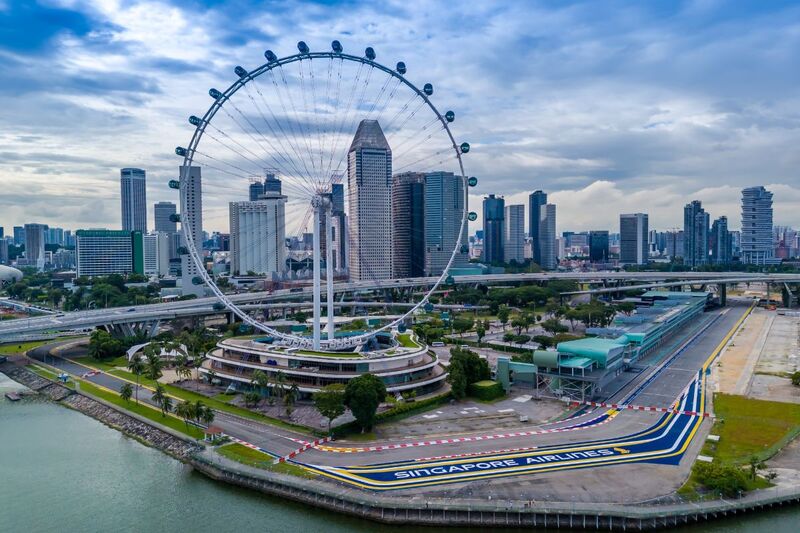 Singapore Grand Prix 2026: Which Industries and Jobs Benefit When F1 Comes to Town?Management
Formula 1 returns to Marina Bay Street Circuit for the 2026 Singapore Grand Prix from 9 to 11 October, with the wider Grand Prix Season Singapore...