The AI Hiring Trap: Why Singapore Companies Are Spending More and Getting Less

Published by Reeracoen Singapore | AI and ICT Talent Outlook Series 2026
Singapore has never been more serious about AI. The National AI Council, chaired personally by PM Lawrence Wong, was announced at Budget 2026. The National AI Strategy 2.0 is backed by over S$1 billion in R&D investment through 2030. Every boardroom conversation includes the word transformation.
And yet, in Reeracoen's survey of 375 Singapore hiring managers, 80.3% said salary expectations are their single biggest hiring challenge. Tech engineers are the hardest role to fill in the entire market. Roles are staying open for 10, 12, sometimes 16 weeks.
The problem is rarely the talent market. It is almost always the approach. Here are the five mistakes we see most consistently, and what to do about each one.
|
MISTAKE 1 Hiring for AI Expertise When You Need AI Readiness THE REALITY Most companies write JDs for the rarest possible candidate: someone who can build and deploy machine learning models at scale, with five years of experience and a postgraduate qualification. In Singapore, that pool is measured in the low thousands. What most companies actually need is someone who can apply AI tools intelligently within a business context.
|
|
|
Most companies do not need an AI expert. They need an AI-ready team. Confusing the two is costing them months. |
|
MISTAKE 2 Using Salary Benchmarks That Are 18 Months Out of Date THE REALITY Overall wage growth in Singapore is forecast to moderate to 4.0-4.3% in 2026. Budget holders apply this logic to AI hiring. It does not apply. For software engineers, data scientists and cybersecurity specialists, the market has not moderated. Based on Reeracoen's Salary Guide 2025/26, software engineers at senior level command SGD 8,000-15,000 per month. Companies posting roles with 2023 budgets are not receiving suitable applications, then spending ten more weeks wondering why.
|
|
|
80.3% of Singapore hiring managers say salary expectations are their number one challenge. The real problem is they are benchmarking against last year's market, not this one. |
|
MISTAKE 3 Overlooking the Talent Already on Your Payroll THE REALITY 68.6% of Singapore hiring managers rank digital and AI skills as their top training priority. Yet most organisations default to external hiring before evaluating whether existing staff could be developed into the roles they need. Mid-career professionals with strong domain knowledge are frequently better candidates for AI-adjacent roles. They understand the company and the customer. They need the technical layer, not a complete rebuild.
|
|
|
The AI talent you are looking for might already work for you. 68.6% of hiring managers prioritise AI training, but most still default to external hiring first. |
|
MISTAKE 4 Writing Job Descriptions That Filter Out Good Candidates Before the Interview THE REALITY Most AI and ICT job descriptions in Singapore are written as wish lists: postgraduate qualification, five years of ML experience, proficiency in eight frameworks, for a role that will primarily involve integrating existing AI tools into business workflows. These JDs consistently attract either the wrong candidates or none at all. Meanwhile, strong AI-Enabled Professionals with genuine business impact potential are self-selecting out because they do not hit every checkbox.
|
|
|
The best AI candidates in Singapore are self-selecting out of poorly written JDs. Shorten your requirements list. You are not being selective with 12 bullet points. You are being invisible. |
|
MISTAKE 5 Running a Hiring Process Designed for a Market That No Longer Exists THE REALITY The best AI and ICT candidates in Singapore are managing two to three competing offers simultaneously. They make decisions in days, not weeks. A five-round interview process with committee sign-off at every stage and a three-week gap between the final interview and an offer does not signal rigour. It signals a company that cannot make decisions. Companies are not losing candidates to better employers. They are losing them to faster ones.
|
|
|
Singapore companies are not just losing AI candidates to better offers. They are losing them to faster processes. That is a fixable problem. |
|
Is your AI hiring strategy working? Reeracoen's specialist AI and ICT consultants work with Singapore hiring managers to fix the exact bottlenecks described above. Live candidate pipelines. Real-time salary benchmarking. Faster results. |
Frequently Asked Questions
Q1: Why is AI talent so hard to hire in Singapore right now?
The core issue is a supply-demand mismatch. Singapore's AI strategy is accelerating demand for experienced AI professionals faster than the local talent pipeline can supply them. Senior AI engineers, data scientists and cybersecurity specialists are in short supply globally, and Singapore's compact talent pool amplifies the shortage. Companies are competing for the same profiles simultaneously, often with similar offers.
Q2: How much should we budget for an AI engineer in Singapore in 2026?
Based on Reeracoen's Salary Guide 2025/26, software engineers at senior level range from SGD 8,000 to SGD 15,000 per month. AI and ML specialists command a further premium of 15-25% above equivalent software engineering bands. Cybersecurity specialists range from SGD 5,000 at junior level to SGD 10,600 and above at director level. Budget planning that does not account for these premiums will result in extended, unsuccessful searches.
Q3: How do I know if my AI hiring strategy is actually working?
Track time-to-fill, offer acceptance rate and 90-day retention monthly. If time-to-fill exceeds six weeks for AI roles, your process needs work. If offer acceptance is below 70%, your salary bands are the issue. These numbers tell you where to focus before the next search opens.
|
Looking for your next AI or ICT role in Singapore? Register with Reeracoen to access exclusive AI and ICT opportunities across Singapore's fastest-growing tech sector. |
|
About the Author Valerie Ong Regional Marketing Manager, Reeracoen Singapore Valerie leads content and market insights for Reeracoen across Southeast Asia. She works closely with Reeracoen's specialist recruitment consultants to translate hiring data, salary benchmarks and labour market trends into practical guidance for Singapore's employers and professionals. Her work draws on Reeracoen's proprietary research including the annual Salary Guide, Hiring Pulse, and Hiring Manager Survey. Language note: This article is published in English. Reeracoen Singapore also publishes selected content in Japanese for our bilingual and Japanese-speaking professional community. |
|
Related Reading |
Data sources: Reeracoen Hiring Manager Survey 2025/26 (375 respondents). Reeracoen Salary Guide 2025/26 (140,000 validated data points). Reeracoen Hiring Pulse Q1 2026. Reeracoen x Rakuten APAC Workforce Whitepaper 2025. Salary figures are indicative basic monthly gross. Actual compensation varies by role scope, company size and market conditions.

Disclaimer:
The information provided in our blog articles is intended for general informational purposes only. It is not a substitute for professional advice and should not be relied upon as such.
While we strive to provide accurate and up-to-date information, the ever-evolving nature of certain topics may result in content becoming outdated or inaccurate over time. Therefore, we recommend consulting with qualified professionals or experts in the respective fields for specific advice or guidance. Any actions taken based on the information contained in our blog articles are solely at the reader's discretion and risk. We do not assume any responsibility or liability for any loss, damage, or adverse consequences incurred as a result of such actions.
We may occasionally provide links to external websites or resources for further information or reference. These links are provided for convenience and do not imply endorsement or responsibility for the content or accuracy of these external sources. Our blog articles may also include personal opinions, views, or interpretations of the authors, which do not necessarily reflect the views of our organisation as a whole. We encourage readers to verify the accuracy and relevance of information presented in our blog articles and to seek professional advice when needed. Your use of this website and its content constitutes acceptance of this disclaimer.
Related Post
 The Fed Raised Rates: What Singapore Employers Should Watch in Hiring and Workforce CostsManagement
The US Federal Reserve's decision to raise interest rates by 25 basis points on 16 September 2026, its first hike since 2023, has prompted plenty...
 AI Is Changing How Work Gets Done: How Singapore Employers Should Plan Their WorkforceManagement
AI is changing how work gets done across Singapore businesses. Regional research from Reeracoen and Rakuten Insight finds Singapore businesses...
 Employers Say They Can't Find the Right Talent. Are They Screening Out Good Candidates Too Early?Management
Most Singapore employers will tell you they're struggling to find the right talent. But the same research raises another question: could some...
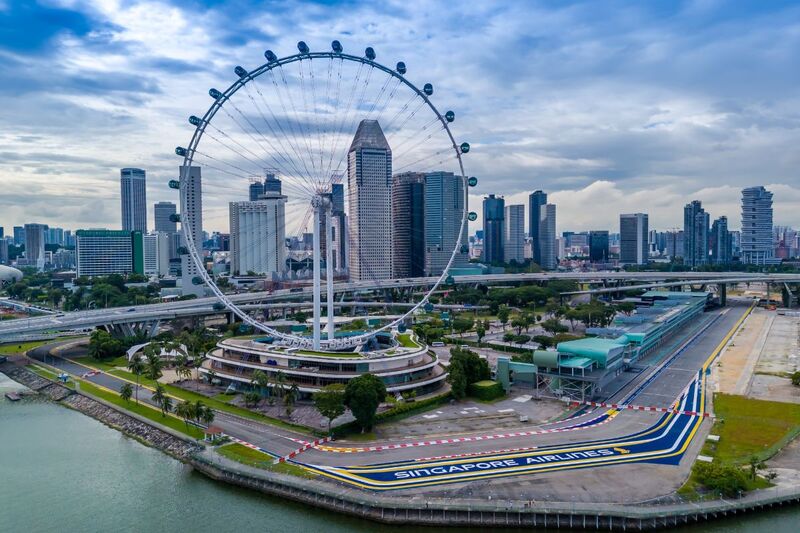 Singapore Grand Prix 2026: Which Industries and Jobs Benefit When F1 Comes to Town?Management
Formula 1 returns to Marina Bay Street Circuit for the 2026 Singapore Grand Prix from 9 to 11 October, with the wider Grand Prix Season Singapore...