Skills AI Cannot Replace: How Singapore Employers Can Build Future-Ready Teams in 2026

By Valerie Ong, Regional Marketing Manager
Published by Reeracoen Singapore, a leading recruitment agency in APAC.
Language
This article is written in English for readers in Singapore. Chinese and Japanese translations are available on our website.
Why the Question Is No Longer “AI or Humans”
By 2026, artificial intelligence has moved from experimentation to everyday adoption across Singapore’s workplaces. AI tools are now embedded in finance, operations, engineering, customer service, and professional services functions.
The real challenge for employers is no longer whether to adopt AI, but how to build teams that remain valuable alongside it.
Singapore employers are increasingly recognising that technology alone does not drive performance. Human capabilities such as judgment, leadership, collaboration, and adaptability continue to determine whether organisations succeed or struggle during transformation.
Understanding which skills AI cannot replace is now a core workforce planning priority.
AI Adoption in Singapore: What the Data Shows
Singapore remains one of Asia’s fastest adopters of workplace AI.
According to national workforce and employer surveys:
- A majority of organisations are already using AI in analytics, automation, or decision support
- Employers expect AI adoption to increase productivity rather than reduce headcount
- Skills shortages persist despite automation, especially in roles requiring judgment and cross-functional thinking
Reeracoen Singapore’s Hiring Manager Survey 2025–2026 shows that while automation has reduced some manual tasks, it has not reduced demand for skilled professionals. Instead, it has raised expectations for human capability.
The Skills AI Cannot Replace
While AI excels at pattern recognition, speed, and scale, there are critical skill areas where human capability remains essential.
1. Leadership and Decision-Making
AI can provide data and recommendations. It cannot take responsibility for decisions.
In 2026, Singapore employers increasingly value leaders who can:
- Interpret complex and conflicting information
- Make decisions under uncertainty
- Balance commercial outcomes with people impact
- Communicate direction clearly during change
Leadership capability is consistently cited as a differentiator in both hiring and retention outcomes.
2. Critical Thinking and Problem Solving
AI operates within defined parameters. It does not understand context, nuance, or unintended consequences in the way humans do.
Employers continue to prioritise professionals who can:
- Question assumptions and outputs
- Diagnose root causes rather than symptoms
- Apply judgment in ambiguous situations
These skills are especially important in regulated sectors such as BFSF, healthcare, and advanced manufacturing.
3. Communication and Stakeholder Management
Human interaction remains central to business success.
Skills that remain in high demand include:
- Clear written and verbal communication
- Cross-functional collaboration
- Negotiation and influence
- Client and stakeholder relationship management
Reeracoen Singapore’s Employee Sentiment Study 2026 shows that employees who feel heard and supported by managers report higher engagement and lower attrition, even during periods of change.
4. Adaptability and Learning Agility
AI changes tools quickly. Humans must adapt continuously.
Employers increasingly value professionals who:
- Learn new systems and processes quickly
- Are open to reskilling and role evolution
- Demonstrate curiosity and growth mindset
According to Reeracoen’s research, more than half of professionals in Singapore view upskilling as a shared responsibility between employer and employee.
5. Ethical Judgment and Accountability
As AI systems influence more decisions, ethical oversight becomes more important.
Humans remain responsible for:
- Governance and compliance
- Risk management and escalation
- Fairness and accountability in decision-making
These capabilities are particularly critical in regulated industries and leadership roles.
What This Means for Employers in Singapore
Building future-ready teams in 2026 requires a shift in hiring and development priorities.
Hire for Capability, Not Just Technical Skill
Technical skills remain important, but they are no longer sufficient on their own.
Employers who hire successfully focus on:
- Transferable skills
- Learning agility
- Leadership potential
This reduces long-term talent risk as technology evolves.
Redesign Roles Around Human Strengths
Rather than replacing roles, effective organisations redesign them.
This includes:
- Removing repetitive tasks through automation
- Expanding roles to include analysis, judgment, and collaboration
- Supporting employees with training and coaching
This approach improves both productivity and engagement.
Invest in Leadership and People Managers
Data consistently shows that poor management drives attrition more than technology.
Employers that invest in leadership development experience:
Higher engagement
Better retention
Stronger performance during transformation
Leadership capability remains one of the least automated and most valuable assets.
What This Means for Professionals
For professionals in Singapore, future-proofing careers means focusing beyond tools.
Professionals who remain in demand tend to:
- Build strong communication and problem-solving skills
- Seek leadership exposure early
- Embrace continuous learning
- Understand how their work contributes to business outcomes
AI literacy matters, but human capability determines long-term career resilience.
Frequently Asked Questions (FAQ)
Will AI replace most jobs in Singapore?
AI will change jobs, but it is more likely to reshape roles than eliminate them entirely.
Which skills should professionals focus on developing?
Leadership, critical thinking, communication, adaptability, and ethical judgment remain highly valued.
How can employers assess human skills during hiring?
Through structured interviews, scenario-based assessments, and behavioural evaluation rather than resumes alone.
Is upskilling enough to stay relevant?
Upskilling is essential, but mindset and adaptability are equally important.
For Employers
Looking to build teams that thrive alongside AI?
For Professionals
Preparing for an AI-enabled workplace?
🔗 Related Articles (Singapore)
You may also find these articles useful:
- How Employers Should Read the MOM Opportunity Index in 2026
- Top In-Demand Jobs in Singapore in 2026: Skills, Salaries and Hiring Trends
- Beyond the Paycheque: What Singapore Employees Really Want in 2026
References
- Ministry of Manpower Singapore, Labour Market Developments 2025
- Reeracoen Singapore, Hiring Manager Survey 2025–2026
- Reeracoen × Rakuten Insight, Singapore Employee Sentiment Study 2026

Disclaimer:
The information provided in our blog articles is intended for general informational purposes only. It is not a substitute for professional advice and should not be relied upon as such.
While we strive to provide accurate and up-to-date information, the ever-evolving nature of certain topics may result in content becoming outdated or inaccurate over time. Therefore, we recommend consulting with qualified professionals or experts in the respective fields for specific advice or guidance. Any actions taken based on the information contained in our blog articles are solely at the reader's discretion and risk. We do not assume any responsibility or liability for any loss, damage, or adverse consequences incurred as a result of such actions.
We may occasionally provide links to external websites or resources for further information or reference. These links are provided for convenience and do not imply endorsement or responsibility for the content or accuracy of these external sources. Our blog articles may also include personal opinions, views, or interpretations of the authors, which do not necessarily reflect the views of our organisation as a whole. We encourage readers to verify the accuracy and relevance of information presented in our blog articles and to seek professional advice when needed. Your use of this website and its content constitutes acceptance of this disclaimer.
Related Post
 The Fed Raised Rates: What Singapore Employers Should Watch in Hiring and Workforce CostsManagement
The US Federal Reserve's decision to raise interest rates by 25 basis points on 16 September 2026, its first hike since 2023, has prompted plenty...
 AI Is Changing How Work Gets Done: How Singapore Employers Should Plan Their WorkforceManagement
AI is changing how work gets done across Singapore businesses. Regional research from Reeracoen and Rakuten Insight finds Singapore businesses...
 Employers Say They Can't Find the Right Talent. Are They Screening Out Good Candidates Too Early?Management
Most Singapore employers will tell you they're struggling to find the right talent. But the same research raises another question: could some...
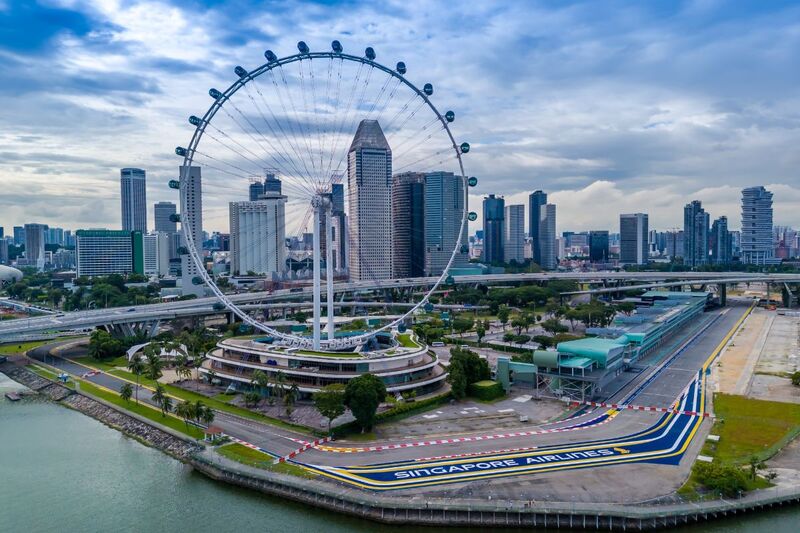 Singapore Grand Prix 2026: Which Industries and Jobs Benefit When F1 Comes to Town?Management
Formula 1 returns to Marina Bay Street Circuit for the 2026 Singapore Grand Prix from 9 to 11 October, with the wider Grand Prix Season Singapore...