Workplace Fairness Case Studies: 5 Real Scenarios & How Employers Can Fix Them

This article is written in English for readers in Singapore. Chinese and Japanese translations are available on our website.
Why Workplace Fairness Matters in 2026
As Singapore prepares to implement the new Workplace Fairness Legislation (WFL) in 2026, companies are entering a new era of accountability and inclusion.
The law, introduced through the Tripartite Committee on Workplace Fairness (TCWF), expands protection against discrimination based on age, race, gender, marital status, caregiving responsibilities, religion, disability, and mental health, while promoting mediation and fair practices across HR functions.
According to the Ministry of Manpower (MOM), about 1 in 4 workplace disputes today stem from perceived unfair treatment. The new legislation aims not only to penalise discrimination but also to help employers build psychologically safe, equitable, and transparent workplaces.
*Case Study 1️⃣ — Age Bias in Recruitment
Scenario:
A job posting for a sales executive role states “preferably below 35 years old.” Several qualified applicants over 40 are automatically filtered out by the HR system.
Resolution:
Under the new WFL, such phrasing and automated filters will be prohibited. Employers must focus on skills and job fit, not age.
✅ Fix: Review job descriptions and ATS screening criteria for indirect age bias. Offer hiring teams unconscious bias training and revise recruitment templates.
*Source: Tripartite Committee on Workplace Fairness (TCWF) Recommendations 2023 — Example of age-related job advertisements and indirect discrimination (MOM, NTUC, SNEF)
*Case Study 2️⃣ — Gender Stereotyping in Promotions
Scenario:
A senior manager avoids assigning overseas projects to female staff, assuming they may face family constraints. A complaint arises citing unequal opportunity.
Resolution:
Promotion and deployment decisions must be based on merit and performance, not assumptions about gender or caregiving.
✅ Fix: Introduce transparent performance matrices, track assignment allocation, and run diversity and inclusion briefings for line managers.
*Source: TAFEP – Fair and Progressive Employment Practices (2024); TCWF Recommendation #6 on “Ensuring Fairness in Career Progression and Development”
*Case Study 3️⃣— Mental Health Disclosure & Retaliation
Scenario:
An employee discloses depression and requests flexible hours for therapy. Shortly after, the employee receives a downgraded review without prior dialogue.
Resolution:
The WFL includes protection against discrimination based on mental health conditions. Retaliatory behaviour breaches fair employment standards.
✅ Fix: Establish confidential wellness reporting channels, include mental health sensitivity in supervisor training, and separate medical disclosures from performance appraisals.
*Source: MOM Press Release (2024) — Extending workplace fairness protections to mental health conditions”
*Case Study 4️⃣ — Unequal Treatment of Caregivers
Scenario:
Two staff apply for flexible work. The caregiver for elderly parents is denied while a non-caregiver receives approval.
Resolution:
Under the WFL, caregiving responsibilities fall under protected characteristics. All flexible-work decisions must be consistent, justified, and documented.
✅ Fix: Implement a written flexible-work policy, create appeals procedures, and train HR to ensure equitable consideration.
*Source: Tripartite Committee on Workplace Fairness Final Report (2023) — Family responsibilities and caregiving status as protected characteristics.
*Case Study 5️⃣ — Retrenchment Selection Bias
Scenario:
During a restructuring, older staff and those on higher pay grades are retrenched disproportionately. The affected employees allege unfair selection.
Resolution:
Retrenchments must be guided by objective, role-based criteria, not age or salary. Documentation is required to justify all decisions.
✅ Fix: Follow MOM’s Fair Retrenchment Framework, consult union representatives, and retain written justifications for audit review.
*Source: MOM – Fair Retrenchment Framework 2024; TCWF Recommendation #9 on “Fairness in Termination and Retrenchment.”
What Employers Should Do Now
To prepare for WFL enforcement in 2026, organisations should:
1️⃣ Conduct internal HR audits for bias across recruitment, promotion, and termination.
2️⃣ Create confidential grievance channels and documentation templates.
3️⃣ Train managers on inclusive communication and legal compliance.
4️⃣ Embed mental health and flexibility support in the Total Rewards framework.
5️⃣ Partner with data-driven recruitment agencies like Reeracoen to design fair hiring and assessment systems.
How Reeracoen Supports Fair & Inclusive Hiring
At Reeracoen Singapore, we help companies stay compliant and credible through:
- Bias-free job ad frameworks and competency-based recruitment.
- Inclusive job evaluation tools aligned with WFL standards.
- Custom training workshops on DEI and fair performance reviews.
- Research-backed insights from the Reeracoen × Rakuten Insight APAC Workforce Whitepaper 2025.
We believe fairness is not just compliance — it’s culture.
💡 FAQ — Workplace Fairness in Singapore
Q1. When will the Workplace Fairness Law take effect?
Expected enforcement: 2026, following parliamentary approval and a one-year preparation window for employers.
Q2. What are the penalties for unfair employment practices?
Depending on severity, MOM and TAFEP can mandate corrective action, mediation, or financial penalties. Serious breaches may face civil or criminal proceedings.
Q3. How can SMEs prepare early?
Start with HR audits, consistent documentation, and manager upskilling. Partner with fair employment specialists.
Q4. Is mental health officially covered under the WFL?
Yes. MOM confirmed that the upcoming legislation includes mental health as a protected characteristic, a major step forward for workplace inclusivity.
💼 For Employers: Book a Fair Employment Consultation
👩💼 For Jobseekers: Explore Inclusive Employers & Submit Your CV
✅ Final Author Credit
By Valerie Ong (Regional Marketing Manager)
Published by Reeracoen Singapore — a leading recruitment agency in APAC.
🔗 Related Articles
- [Singapore 2025 in Review: What Employers Should Change in 2026]
- [Prioritising Mental Health in Singapore Workplaces]
- [Salary & Benefits 2026: What Singapore Employers Should Budget For]
📚 References
- Tripartite Committee on Workplace Fairness Final Report (2023)
- Ministry of Manpower – Workplace Fairness Bill Updates (2024–2025)
- MOM – Fair Retrenchment Framework 2024
- TAFEP Singapore – Fair and Progressive Employment Practices (2024)
- Reeracoen Singapore – Mental Health Handbook 2025
- Reeracoen × Rakuten Insight APAC Workforce Whitepaper 2025

Disclaimer:
The information provided in our blog articles is intended for general informational purposes only. It is not a substitute for professional advice and should not be relied upon as such.
While we strive to provide accurate and up-to-date information, the ever-evolving nature of certain topics may result in content becoming outdated or inaccurate over time. Therefore, we recommend consulting with qualified professionals or experts in the respective fields for specific advice or guidance. Any actions taken based on the information contained in our blog articles are solely at the reader's discretion and risk. We do not assume any responsibility or liability for any loss, damage, or adverse consequences incurred as a result of such actions.
We may occasionally provide links to external websites or resources for further information or reference. These links are provided for convenience and do not imply endorsement or responsibility for the content or accuracy of these external sources. Our blog articles may also include personal opinions, views, or interpretations of the authors, which do not necessarily reflect the views of our organisation as a whole. We encourage readers to verify the accuracy and relevance of information presented in our blog articles and to seek professional advice when needed. Your use of this website and its content constitutes acceptance of this disclaimer.
Related Post
 The Fed Raised Rates: What Singapore Employers Should Watch in Hiring and Workforce CostsManagement
The US Federal Reserve's decision to raise interest rates by 25 basis points on 16 September 2026, its first hike since 2023, has prompted plenty...
 AI Is Changing How Work Gets Done: How Singapore Employers Should Plan Their WorkforceManagement
AI is changing how work gets done across Singapore businesses. Regional research from Reeracoen and Rakuten Insight finds Singapore businesses...
 Employers Say They Can't Find the Right Talent. Are They Screening Out Good Candidates Too Early?Management
Most Singapore employers will tell you they're struggling to find the right talent. But the same research raises another question: could some...
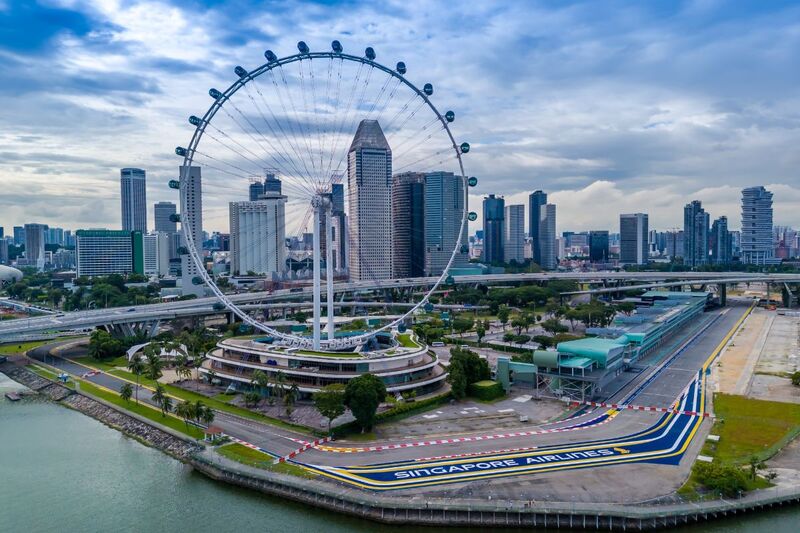 Singapore Grand Prix 2026: Which Industries and Jobs Benefit When F1 Comes to Town?Management
Formula 1 returns to Marina Bay Street Circuit for the 2026 Singapore Grand Prix from 9 to 11 October, with the wider Grand Prix Season Singapore...