After the Final Whistle: What World Cup 2026 Teaches Singapore Employers About Building Team Culture

Spain became world champions after defeating Argentina 1-0 after extra time in the FIFA World Cup 2026 Final. For football fans, it was a dramatic finale. For employers, however, the more interesting story began long before the final whistle. Spain's success was built over years of reinforcing the same system rather than relying on one exceptional tournament, developing squad depth, leadership continuity, and a culture where every player was prepared when called upon.
Those are not football problems. They are organisational ones. As organisations across Singapore continue navigating skills shortages, leadership transitions, and evolving employee expectations, these lessons are arguably more relevant than ever.
Key Takeaways
- Bench depth decides outcomes, not just talent at the top. In a market where only 23.2% of Singapore hiring managers feel very confident they can find qualified talent when they need it, depth matters as much as star power.
- Succession planning is a development problem, not a sourcing problem. Reeracoen's own research across Southeast Asia points to the same conclusion football does: pipelines have to be built before the moment that tests them.
- Stability is now a genuine retention lever, not a soft benefit. Singapore candidates increasingly rank organisational stability and leadership credibility above title alone.
- Discipline under pressure protects what has already been built. A single avoidable error can cost an organisation flexibility for the rest of a critical period, just as it did for Argentina.
- Consistency compounds. One exceptional performance rarely creates lasting success. Sustainable results come from reinforcing the right systems over time.
Great Teams Are Built Long Before the Final Whistle
What is notable about Spain's run, and about the great international sides that came before them, is that none of these periods of dominance were built in a single tournament. They were built through a sustained period, often two to four years, of reinforcing the same tactical identity, the same core group of players, and the same standards, match after match, long after the excitement of any single result had faded.
This is the part of the World Cup story that is genuinely instructive for Singapore employers, and it has almost nothing to do with the 90 minutes of the final itself. Reeracoen's Beyond the Paycheque Employee Sentiment Study found that Singapore employees increasingly value clarity on how training links to promotion criteria and internal mobility, not training as an isolated perk. In other words, the same principle applies inside a company as inside a football federation: people stay engaged with a system when they can see it being reinforced consistently over time, not reinvented every time leadership changes or a target is missed.
Building Bench Strength in the Workplace
Spain's title-winning goal did not come from a starter. It came from Ferran Torres, brought on as a substitute, who scored in the second period of extra time to decide the biggest match in football. That is not an isolated football story. It is a direct illustration of a gap Reeracoen sees constantly in Singapore's own hiring data.
According to Reeracoen's Singapore Hiring Manager Survey 2025/2026, only 23.2% of hiring managers say they are very confident in finding qualified local talent when they need it, while nearly half, 49.1%, describe themselves as only somewhat confident. That is not a market short on talent overall. It is a market where many organisations do not have genuine depth in the roles that matter most, which means that when a key person leaves, goes on leave, or simply cannot deliver in a specific high-stakes moment, there is no equivalent of Ferran Torres ready to step in and perform.
Consider a finance team where only one employee understands a critical reporting process, or a sales organisation where the strongest client relationships sit with a single director. These teams may perform well during normal operations, but become vulnerable when key individuals leave, take extended leave, or are promoted. Building bench strength reduces that operational risk long before it becomes a crisis.
Building that depth is not primarily a recruitment exercise. It requires identifying who inside the organisation is being developed toward a bigger role well before that role becomes urgent, and being honest about whether that development is actually happening or just assumed to be happening by default.
Succession Planning Is a Development Problem, Not a Sourcing Problem
Reeracoen's research across Southeast Asia has repeatedly pointed to the same underlying issue: shortages at the mid-level and leadership tiers are rarely about a lack of candidates in the market. They are about organisations not investing early enough in the people who are already inside the business. Our regional hiring research frames this directly: closing a mid-level talent gap is a matter of identifying high-potential junior talent now and investing in structured leadership development over an 18 to 24 month horizon, not waiting until a gap opens and trying to hire externally under time pressure.
Reeracoen's BFSF Talent Outlook 2026 makes the same recommendation explicitly for Singapore's banking, financial services, and fintech employers: plan leadership and succession pipelines early, rather than treating succession as a conversation that only happens once a senior departure is already confirmed. Spain did not discover Ferran Torres's readiness to perform in the World Cup final. That readiness was the product of years of him being developed, tested, and trusted in exactly that kind of moment before it actually arrived.
Discipline Under Pressure Protects What Has Already Been Built
Argentina played most of the final with eleven men on the pitch and were still goalless after ninety minutes against a stronger side, a genuinely composed defensive performance. But deep into second-half stoppage time, Enzo Fernández received a second yellow card for a reckless challenge, reducing Argentina to ten men for the remainder of the match, including the entirety of extra time. Spain's winning goal came seventeen minutes into that spell.
The lesson here is precise, not general. It is not that mistakes never happen under pressure; they clearly do, even to elite performers. It is that the timing and avoidability of a lapse in discipline matters enormously, because it removes flexibility exactly when an organisation, or a team, can least afford to lose it. In a Singapore workplace context, this rarely looks as dramatic as a red card. It looks like a compliance shortcut taken under deadline pressure, or a decision made without proper process during a high-stakes negotiation or client escalation. The cost is the same in kind: an organisation that had been performing well loses room to manoeuvre at exactly the moment it needed that room most.
Building a Stable Workplace Culture
Reeracoen's BFSF Talent Outlook 2026 found that Singapore professionals, particularly at mid to senior levels, increasingly weigh organisational stability and leadership credibility above title alone when evaluating where to build a career. That finding sits alongside a broader pattern in Reeracoen's Beyond the Paycheque study: employees are more willing to stay with employers who demonstrate consistency in how they communicate, train, and promote people, even when compensation is only competitive rather than exceptional.
Spain's dominance was not simply a run of good results. It was a demonstration, repeated often enough that players and fans stopped being surprised by it, that the system worked and would keep working. That is precisely what stability signals inside a company. It is not the absence of pressure or setbacks. It is evidence, accumulated over time, that the organisation's way of operating holds up when it is tested.
What This Means for Singapore Employers Heading Into H2 2026
None of the individual lessons here are new. Employers have heard “invest in your bench,” “plan succession early,” and “build a stable culture” many times before. What the World Cup final actually illustrates is how these things compound together, and how visible their absence becomes at exactly the wrong moment. Spain did not win solely because of individual brilliance. They won because two years of consistent investment gave them greater depth, discipline, and stability when the match demanded it.
Great organisations, like great World Cup champions, are not defined by how they perform on their best day. They are defined by the culture, capability, and leadership they have spent years building before that day ever arrives.
Frequently Asked Questions
What is the final score of the FIFA World Cup 2026 final?
Spain beat Argentina 1-0 after extra time at MetLife Stadium on 19 July 2026, with substitute Ferran Torres scoring the winning goal in the 106th minute.
What can Singapore employers learn from Spain's World Cup win?
The final illustrates the value of genuine bench depth, early succession planning, disciplined execution under pressure, and organisational stability built consistently over time, all of which have direct parallels in Reeracoen's own Singapore hiring and retention research.
Why does succession planning matter more than reactive hiring?
Reeracoen's research across Southeast Asia points to mid-level and leadership shortages being a development problem rather than a sourcing problem. Organisations that identify and develop high-potential talent 18 to 24 months ahead of need are better insulated from market scarcity than those hiring reactively.
How confident are Singapore employers in finding qualified talent?
According to Reeracoen's Hiring Manager Survey 2025/2026, only 23.2% of Singapore hiring managers say they are very confident in finding qualified local talent, while 49.1% describe themselves as only somewhat confident, a signal that many organisations lack genuine depth in critical roles.
Does organisational stability really affect employee retention in Singapore?
Yes. Reeracoen's BFSF Talent Outlook 2026 found that Singapore professionals, particularly at mid to senior levels, increasingly prioritise organisational stability and leadership credibility over title alone, consistent with findings in Reeracoen's Beyond the Paycheque study on what drives retention.
Get in Touch
- Want to build a stronger leadership pipeline before the next critical business challenge? Speak with a Reeracoen consultant about succession planning, workforce planning, and developing future-ready teams.
- Looking to add genuine bench depth to your team ahead of H2 2026? Get in touch with Reeracoen Singapore.
Related Articles
- Top 10 Hiring Trends to Watch in 2026
- Cracking Retention in 2026: Why Onboarding Makes or Breaks Engagement
- 6 High-Impact Leadership Roles Singapore Companies Must Fill in 2026
About the Author
Valerie Ong
Regional Marketing Manager, Reeracoen Group
Valerie leads content and market insights for Reeracoen across Asia. She works closely with Reeracoen's specialist recruitment consultants to translate hiring data, salary benchmarks and labour market trends into practical guidance for Singapore's employers and professionals. Her work draws on Reeracoen's proprietary research including the annual Salary Guide, Hiring Pulse, and Hiring Manager Survey.
Language note: This article is published in English. Reeracoen Singapore also publishes selected content in Japanese and Mandarin for our bilingual and Japanese-speaking professional community.
References
- FIFA World Cup 2026 Final: Spain v Argentina, Match 104. FIFA. https://www.fifa.com/en/match-centre/match/17/285023/289292/400021543
- Reeracoen Singapore Hiring Manager Survey 2025/2026
- Reeracoen Singapore Beyond the Paycheque Employee Sentiment Study 2026
- Reeracoen Singapore BFSF Talent Outlook 2026

Disclaimer
Match details in this article are drawn from publicly available FIFA and sports media reporting and were accurate at the time of writing. This article uses the World Cup final as a workplace culture lens and is not affiliated with or endorsed by FIFA.
Related Post
 The Fed Raised Rates: What Singapore Employers Should Watch in Hiring and Workforce CostsManagement
The US Federal Reserve's decision to raise interest rates by 25 basis points on 16 September 2026, its first hike since 2023, has prompted plenty...
 AI Is Changing How Work Gets Done: How Singapore Employers Should Plan Their WorkforceManagement
AI is changing how work gets done across Singapore businesses. Regional research from Reeracoen and Rakuten Insight finds Singapore businesses...
 Employers Say They Can't Find the Right Talent. Are They Screening Out Good Candidates Too Early?Management
Most Singapore employers will tell you they're struggling to find the right talent. But the same research raises another question: could some...
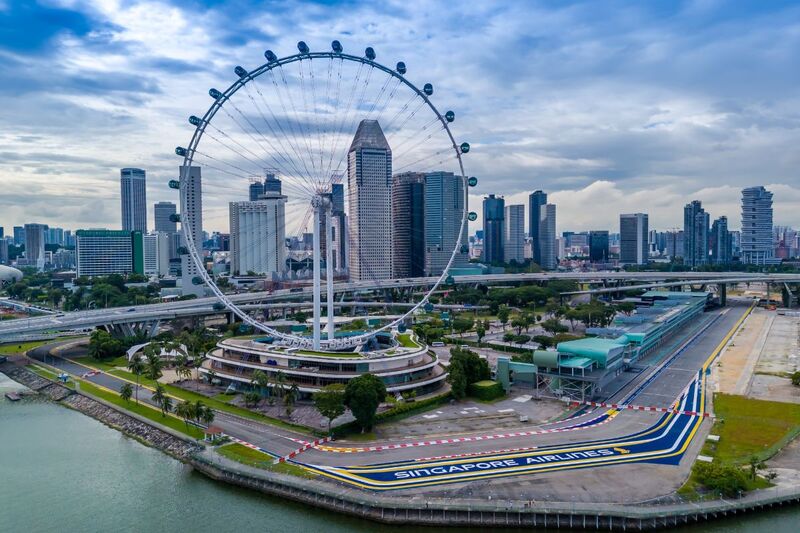 Singapore Grand Prix 2026: Which Industries and Jobs Benefit When F1 Comes to Town?Management
Formula 1 returns to Marina Bay Street Circuit for the 2026 Singapore Grand Prix from 9 to 11 October, with the wider Grand Prix Season Singapore...