JB-Singapore RTS Link: What Workers and Commuters in Singapore Need to Know in 2026
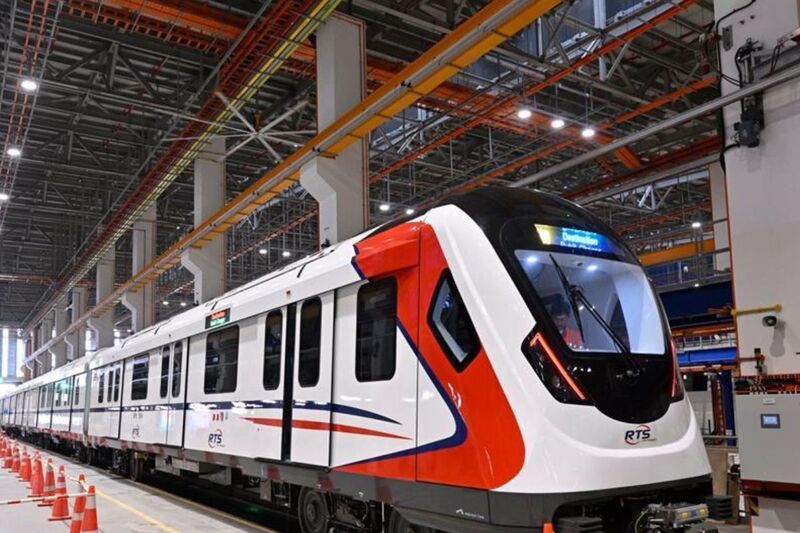
Image Source: Railway Gazette
It has been talked about for decades. It has survived political changes, pandemic delays and multiple revised timelines. And now, the Johor Bahru-Singapore Rapid Transit System Link — the RTS Link — is finally becoming real.
For Singapore workers and commuters, the RTS Link is more than a new train line. It is a potential reconfiguration of where you live, how far you are willing to commute, and in some cases, what jobs become accessible to you. For employers, it widens the talent catchment area for roles based in the north of Singapore and raises new questions about hybrid work, cross-border employment and what a competitive benefits package looks like when housing costs are part of the equation.
This guide covers everything you need to know — the practical details of the link itself, what crossing the border will actually feel like, and what it means for your career options in 2026.
RTS Link Fast Facts: The Essential Details
|
Detail |
What You Need to Know |
|
Route |
|
|
Travel time |
Approximately 5 minutes between stations (train journey only) |
|
Total end-to-end time |
Estimated 15–25 minutes including immigration clearance under optimal conditions |
|
Frequency |
Every 3–5 minutes at peak hours |
|
Operating hours |
Expected 5am to midnight (subject to official confirmation) |
|
Ticket price |
To be confirmed by LTA and Prasarana — expected to be comparable to or competitive with current bus fares across the Causeway |
|
Immigration model |
Automated e-clearance at both ends; ICA and JIM integration with biometric e-gates |
|
Connection (SG side) |
Woodlands North is on the Thomson-East Coast Line (TEL) — direct connection to the CBD, Marina Bay, and Orchard |
|
Connection (JB side) |
Bukit Chagar station is in the Johor Bahru city centre, with shuttle and taxi connections planned to surrounding areas |
|
Passenger capacity |
Designed to handle up to 10,000 passengers per hour per direction at peak |
|
Source |
LTA Singapore, MyRapid Malaysia, official RTS Link project updates |
Important: Ticket prices and some operational details were still being finalised at the time of writing. Always check the latest updates from LTA Singapore (lta.gov.sg) and MyRapid (myrapid.com.my) before making any relocation or commuting decisions based on cost assumptions.
What Border Crossing Will Actually Look Like
The single biggest friction point of any JB-Singapore commute today is immigration. Hours at the Causeway or Second Link checkpoints are a known reality that has kept many Singaporeans and PRs from seriously considering JB as a base, even as housing costs in Singapore have surged.
The RTS Link is designed to change this fundamentally. Here is how the crossing is expected to work:
Automated, end-to-end e-clearance
Both the Singapore (ICA) and Malaysian (JIM) immigration clearance will be handled via biometric e-gates integrated into the stations themselves. Passengers will clear immigration before boarding, meaning there is no stopping mid-journey. The process is designed to be continuous and automated for most travellers, removing the queue-based bottleneck of the current road crossings.
No more checkpoint queues for regular commuters
For Singaporeans, PRs and Malaysian workers with valid passes, the e-gate process is expected to take seconds rather than minutes, assuming enrolled biometrics and a valid travel document. This is the critical design difference from the current system: you are not joining a queue of vehicles and buses — you are moving through a system designed specifically for high-frequency foot traffic.
What you will need
- A valid Singapore passport, or NRIC for Singapore citizens and PRs making the crossing.
- A valid Malaysian travel document (passport) for the Malaysian side.
- Enrolled biometrics with both ICA and JIM (most regular travellers will already have these from prior crossings).
- A registered RTS Link account or contactless payment method for ticketing.
- Ensure your passport has sufficient validity — both Singapore and Malaysian immigration require a minimum of 6 months remaining.
The caveat: e-gate systems have peak-hour pressure points. During the morning rush, even a 30-second per-person processing time across thousands of commuters creates queuing. The RTS Link’s capacity design is built to handle this, but real-world performance in the first months of operation will be the true test.
What the RTS Link Means for Your Career Options
For Singapore workers, the RTS Link opens up a set of career and lifestyle options that were previously impractical. Here is how to think about it.
If you are currently living in Singapore and considering JB
The RTS Link makes a JB base genuinely viable for the first time for people working in northern Singapore or in roles that allow flexibility. Woodlands North on the Thomson-East Coast Line connects directly to the CBD, Orchard, and Marina Bay — meaning a JB resident could reach Raffles Place in under 40 minutes under good conditions.
The savings on housing are significant. A two-bedroom apartment in JB city centre costs a fraction of an equivalent property in Singapore. For professionals at mid-career level earning Singapore salaries, the arbitrage is real — though it comes with trade-offs in lifestyle, schooling options and the reliability of the crossing.
|
JB Area |
Est. Travel Time to SG CBD* |
Approx. Monthly Rent (2-bed) |
Best For |
|
Johor Bahru City Centre |
~20–30 min via RTS + TEL |
MYR 1,800–2,800/month (~SGD 530–820) |
Shortest commute, most urban feel |
|
Taman Molek / Tebrau |
~35–45 min via RTS + shuttle/taxi + TEL |
MYR 1,400–2,200/month (~SGD 410–650) |
More residential, good amenities |
|
Iskandar Puteri (Medini) |
~45–60 min total |
MYR 1,600–2,600/month (~SGD 470–770) |
Newer development, international schools nearby |
|
Skudai / Tampoi |
~40–55 min total |
MYR 1,200–2,000/month (~SGD 350–590) |
Budget-friendly, less central |
Note: Rent figures are approximate and subject to change. Travel times assume optimal conditions including e-gate processing and TEL journey. Factor in variability, especially during peak hours and public holidays. Exchange rate based on approximately MYR 3.4 to SGD 1.
If you are a Malaysian PR or work pass holder in Singapore
The RTS Link gives you a genuine choice about where to base yourself that the current crossing infrastructure does not. If your workplace is in or near Woodlands, Sembawang or the northern corridor, a JB commute via RTS becomes practical in a way it simply was not before.
For those already commuting from JB, the RTS Link should reduce your daily crossing time substantially — particularly if you are currently using the Causeway buses, which can add an hour or more to each leg during peak traffic.
For employers: what this means for your talent pool
From a hiring perspective, the RTS Link expands the realistic candidate pool for roles based in the northern part of Singapore. Professionals based in JB who were previously unwilling to consider a Singapore job due to commute friction may now be open to it. This is particularly relevant for manufacturing, logistics, engineering and supply chain roles concentrated in the Woodlands, Jurong and Tuas industrial corridors.
Practical Considerations Before You Make Any Decisions
The RTS Link is a significant development, but it is not a magic solution to every cross-border challenge. Here are the practical realities to factor in before making any major decisions based on it.
Tax and salary implications
If you are a Singapore-based employee who relocates to JB, your Singapore income tax obligations do not change based on where you sleep — you remain taxable in Singapore on your Singapore-source income. However, if your arrangement shifts to a Malaysian employment structure, the picture becomes more complex. Take professional tax advice before making any formal changes to your employment arrangement.
CPF contributions
For Singapore citizens and PRs, CPF contributions continue regardless of where you live. There is no CPF exemption for living in JB while working in Singapore. This is an important consideration when calculating the true cost-benefit of a cross-border lifestyle.
Healthcare access
Living in JB means your primary healthcare access is in Malaysia. While Singaporean private healthcare remains accessible (at the cost of a round trip), you will need to plan your healthcare arrangements accordingly. Many JB-Singapore commuters use a mix of Malaysian private healthcare for routine needs and Singapore for specialist care.
Schooling
For families with school-age children, Iskandar Puteri has a growing cluster of international schools that cater to expat and cross-border families. This is one of the more developed parts of the JB living ecosystem — but research specific schools, bus routes and fee structures carefully before committing.
|
Before You Decide: The RTS Link Commute Checklist |
|
☐ Have you calculated total door-to-door time (including your JB home to Bukit Chagar station)? |
|
☐ Have you confirmed your current work pass conditions allow you to live in Malaysia? |
|
☐ Have you taken tax advice on your Singapore and Malaysian obligations? |
|
☐ Have you researched healthcare options in your target JB area? |
|
☐ Have you factored in school options if you have children? |
|
☐ Have you visited the area at rush hour to assess real conditions, not just maps? |
|
☐ Have you calculated the true cost comparison including transport costs, and not just rent savings? |
The Career Angle: Does the RTS Link Change What Jobs You Should Consider?
For most Singapore professionals, the RTS Link does not fundamentally change which jobs you should be targeting — but it does change the geography of what is practical.
If you are currently limiting your job search to roles in the CBD or near your home MRT station, the RTS Link is worth factoring into your thinking. Roles in Woodlands, Sembawang, and the northern corridor that previously felt remote become meaningfully more accessible when the Woodlands North TEL station is your Singapore entry point.
For candidates who have been considering a role in Singapore from JB but have been put off by the commute, the RTS Link is worth revisiting. The honest advice is to wait until the link has been operating for at least a few months before making major decisions based on it — real-world performance data is more reliable than pre-opening projections. But the direction of travel is clear, and planning ahead of the opening gives you an advantage.
Frequently Asked Questions
When does the RTS Link open?
The official opening date should be confirmed by LTA Singapore and Prasarana Malaysia. The link has faced multiple delays over its development history, so always verify the latest confirmed date from official sources (lta.gov.sg or myrapid.com.my) before making any plans based on it. At time of writing, the opening is expected in 2026.
How much will the RTS Link ticket cost?
Ticket pricing had not been officially confirmed at the time of writing. Pricing is expected to be set jointly by LTA Singapore and Prasarana Malaysia, and is anticipated to be positioned as an affordable commuter option. Check lta.gov.sg and myrapid.com.my for the latest confirmed fares before planning your budget.
Can I use my Singapore EZ-Link card on the RTS Link?
The payment integration details were still being finalised at the time of writing. It is expected that the RTS Link will integrate with Singapore’s existing contactless payment infrastructure, but confirm the latest ticketing arrangements from official sources before assuming compatibility.
Do I need a visa to cross from Singapore to JB via the RTS Link?
Singapore citizens and PRs do not require a visa for short stays in Malaysia (typically up to 90 days). Malaysian citizens do not require a visa to enter Singapore for most visit purposes. However, work pass holders and long-term residents should check their specific pass conditions, as some passes have conditions on the frequency or nature of exits from Singapore. When in doubt, check with ICA Singapore and the Malaysian Immigration Department.
Is living in JB and working in Singapore legally allowed?
Yes — many thousands of Malaysians and some other nationalities currently live in JB and work in Singapore on valid Employment Passes, S Passes, or Work Permits. Singapore citizens and PRs are also legally free to live in Malaysia. The key considerations are employment pass conditions (some passes have specific requirements), tax obligations in both countries, and CPF contributions for Singapore citizens and PRs. Always take professional advice on the tax implications before making formal arrangements.
Explore Your Options in Singapore’s Job Market
Whether the RTS Link changes your commute calculus or simply confirms you are in the right place, Singapore’s job market in 2026 has strong demand across a wide range of functions and industries. If you are ready to explore what is available — or want to understand what your skills are worth right now — Reeracoen’s consultants can help.
|
Looking for roles in Singapore? |
|
Find out what Singapore employers are paying for your role. |
Related Articles
- AI Jobs Are Booming in Singapore — But Are You Actually Qualified? A Realistic 2026 Skills Checklist
- Singapore’s Labour Market in 2026: What 4Q 2025 Signals for Hiring, Wages and Job Security Ahead
- Top In-Demand Jobs in Singapore: Q1 2026 Update — Roles Employers Are Hiring for Now
About the Author
|
Valerie Ong Regional Marketing Manager, Reeracoen Singapore Valerie leads content and market insights for Reeracoen across Southeast Asia. She works closely with Reeracoen’s specialist recruitment consultants to translate hiring data, salary benchmarks and labour market trends into practical guidance for Singapore’s employers and professionals. Her work draws on Reeracoen’s proprietary research including the annual Salary Guide, Hiring Pulse, and Hiring Manager Survey. |
Language note: This article is published in English. Reeracoen Singapore also publishes selected content in Japanese for our bilingual and Japanese-speaking professional community.
References
1. RTS Link Project — Land Transport Authority Singapore
2. RTS Link — Prasarana Malaysia / MyRapid
3. Immigration & Checkpoints Authority Singapore
4. Reeracoen Singapore Salary Guide 2025–2026 and placement data (proprietary research)

Disclaimer:
The information provided in our blog articles is intended for general informational purposes only. It is not a substitute for professional advice and should not be relied upon as such.
While we strive to provide accurate and up-to-date information, the ever-evolving nature of certain topics may result in content becoming outdated or inaccurate over time. Therefore, we recommend consulting with qualified professionals or experts in the respective fields for specific advice or guidance. Any actions taken based on the information contained in our blog articles are solely at the reader's discretion and risk. We do not assume any responsibility or liability for any loss, damage, or adverse consequences incurred as a result of such actions.
We may occasionally provide links to external websites or resources for further information or reference. These links are provided for convenience and do not imply endorsement or responsibility for the content or accuracy of these external sources. Our blog articles may also include personal opinions, views, or interpretations of the authors, which do not necessarily reflect the views of our organisation as a whole. We encourage readers to verify the accuracy and relevance of information presented in our blog articles and to seek professional advice when needed. Your use of this website and its content constitutes acceptance of this disclaimer.
Related Post
 Singapore Has 68,600 Job Vacancies. So Why Is It Taking Longer to Find a Job?General
Singapore had 68,600 job vacancies in June 2026 and overall unemployment of just 1.9 percent. On paper, that looks like good news for anyone job...
 「I’m Here for You」―Reeracoen Wayが言葉を超えたときGeneral
フィリピンの、とある子どもたちが多く暮らす施設で、聞き慣れたメッセージが流れ始めました。 「I’m Here for You」 2026年8月、Reeracoen Singaporeのブランチマネージャー・須長が、Christian Mission Service Philippines...
- “我在你身边”:Reeracoen之道超越文字的时刻General
在菲律宾的一个儿童村,距离Reeracoen遍布亚洲的各个办公室很远的地方,一段熟悉的旋律开始响起。 “我在你身边。” 这一次,它不是写在演示文稿上,也不是在会议中说出的。 Reeracoen新加坡分公司经理砂贺正一(Shoichi...
- “I’m Here for You”: When the Reeracoen Way Became More Than WordsGeneral
In a children’s village in the Philippines, far from Reeracoen’s offices across Asia, a familiar message began to play. “I’m Here for You.” This...