Singapore Ranked #23 in the World's Best Cities: What It Really Means for Employers and Job Seekers
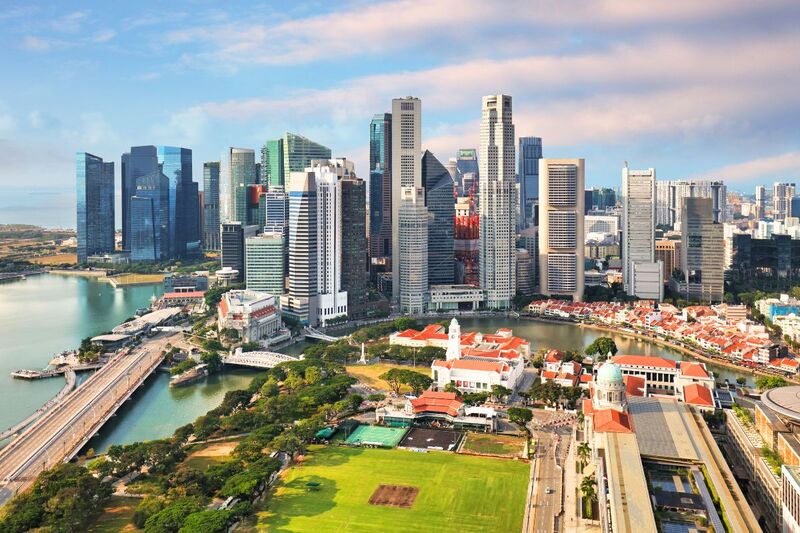
In March 2026, Time Out released its annual Best Cities in the World ranking — a survey of more than 24,000 residents across 150 cities — and Singapore landed at #23. Headlines celebrated the result. But for employers trying to attract talent and professionals weighing their career options, a ranking number only tells part of the story.
What the data actually reveals is a city that excels in the fundamentals — infrastructure, safety, well-being — while grappling with real pressures around affordability and lifestyle that directly affect how companies hire and how candidates choose where to build their careers. Here is what the ranking means in practice, backed by Reeracoen's latest workforce data from across Singapore.
|
Singapore at a Glance: What the Numbers Actually Say |
|
#23 in Time Out Best Cities in the World 2026, surveying 24,000+ residents across 150 cities |
|
93% public transport approval — joint-highest of any city on the list (Time Out, 2026) |
|
#13 globally for green spaces; #9 for overall well-being and quality of life (Time Out, 2026) |
|
4.0–4.3% projected average wage growth in Singapore in 2026, down from prior years (Reeracoen Salary Guide 2025/2026) |
|
26% turnover rate in Manufacturing in 2025 — one of the highest across sectors (Reeracoen Salary Guide 2025/2026) |
|
Only 23.2% of hiring managers feel very confident about finding qualified local talent (Reeracoen Hiring Manager Survey 2025/2026) |
|
Top hiring sectors Q1 2026: Manufacturing and Engineering, Banking and Financial Services, Trading and Distribution, Professional Services, and cross-border coordination roles (Reeracoen Hiring Pulse Q1 2026) |
Where Singapore Genuinely Leads
The Time Out survey gave Singapore a 93% approval rating for public transport — the joint-highest of any city on the list. Walkability scored 86%, reflecting the city's reliable pedestrian infrastructure, and Singapore ranked #13 globally for green spaces and #9 for overall well-being and quality of life.
These are not soft lifestyle metrics. For employers, they translate directly into workforce outcomes. Cities with strong public transport have larger and more accessible talent pools because commuting barriers are reduced. Well-being scores correlate with employee engagement and retention. Singapore's consistent liveability record is a genuine competitive advantage when attracting regional and international professionals.
Reeracoen's Hiring Pulse Q1 2026 confirms that hiring demand across Singapore remains resilient and selective, with active activity in Manufacturing and Engineering, Banking and Financial Services, Trading and Distribution, and Professional Services. The foundations that make Singapore a liveable city are also the foundations that make it a functioning business hub.
The Real Challenges: Cost and Lifestyle Gaps
The ranking also surfaces tensions that anyone working in Singapore will recognise. Nightlife scored #90 globally — a gap that matters because lifestyle offerings influence how attractive a city feels to younger professionals, particularly those comparing Singapore with regional alternatives like Bangkok (#8) or Seoul (#9).
The more significant pressure, however, is cost. Rising costs in Singapore are not just a headline — they have a measurable effect on workforce expectations and employer competitiveness.
Reeracoen's Singapore Salary Guide 2025/2026, based on analysis of over 140,000 verified data points, projects that wage growth will moderate to an average of 4.0–4.3% annually in 2026. The proportion of firms planning wage increases has declined most sharply in Financial Services and Information and Communications — two of the city's most prominent hiring sectors.
This creates a tension employers cannot afford to ignore. Salary expectations among candidates remain elevated even as budgets tighten. When the cost of living is high and wage growth is moderating, the gap between what candidates expect and what companies plan to offer can widen — slowing hiring timelines and increasing early turnover risk. Manufacturing saw a 26% turnover rate in 2025, one of the highest across sectors, underscoring how much retention now depends on more than base pay.
Singapore vs Asia's Major Cities: A Talent Mobility Question
Bangkok ranked #8, Seoul #9, Tokyo #10, and Hong Kong #15 in the Time Out ranking. Singapore sits at #23. For professionals who are mobile across Asia, this is the backdrop to their decision-making.
Each city offers a different value proposition. Tokyo and Seoul lead on culture and food. Bangkok scores highly on nightlife and affordability. Singapore's comparative strength lies in stability, governance, career infrastructure, and the concentration of regional headquarters. For mid-to-senior professionals in finance, supply chain, manufacturing, and bilingual cross-border roles, Singapore remains the reference market in Southeast Asia.
That said, employers in Singapore cannot assume the city will attract talent by default. Professionals from across Asia are increasingly comparing total packages — not just salary, but lifestyle, flexibility, and career trajectory — across multiple cities simultaneously. Employer value propositions need to reflect this reality.
What This Means for Employers in Singapore
Salary alone will not secure the talent you need.
Reeracoen's Beyond the Paycheque: Singapore Employee Sentiment Study 2026 — which surveyed 337 working professionals — found that while a meaningful salary increase is the single strongest retention lever, it is consistently followed by better benefits, work-life balance, and flexible or hybrid working arrangements. Employees increasingly expect flexible arrangements alongside visible pathways for skills development and progression.
Practically, this means:
- Benchmark compensation realistically. Salary expectations in Singapore remain elevated even as wage growth forecasts moderate. Above-market packages are particularly important for specialist roles in AI, cybersecurity, and bilingual cross-border functions. Reeracoen's Salary Guide provides role-level benchmarks to anchor your planning.
- Build in non-salary value deliberately. The employee sentiment data is clear: total employment value — not just the base offer — determines whether candidates accept and whether employees stay. Predictable hybrid arrangements, protected learning time, and defined career pathways all feature in what professionals weigh. Avoid vague messaging about 'good culture' — translate intent into observable practices.
- Strengthen your employer brand. Reeracoen's Hiring Manager Survey 2025/2026 found that only 23.2% of hiring managers feel very confident about finding qualified local talent, and 47.4% see employer branding support as a top contribution from recruitment partners. In a competitive regional talent market, how your company is perceived matters as much as what it pays.
- Plan for realistic hiring timelines. Reeracoen's Q1 2026 Hiring Pulse notes that specialist and bilingual talent remains structurally tight. Expansion headcount requires stronger justification and longer lead times. Early pipeline-building and proactive outreach are essential — last-minute hiring will cost you quality.
What This Means for Professionals in Singapore
Singapore's ranking reflects a city that still works exceptionally well for building a career — particularly at certain career stages and in certain sectors. Here is how to position yourself in this market:
- Know the salary landscape before you negotiate. With wage growth moderating and firms applying greater cost discipline, anchoring your expectations in market data matters. Reeracoen's Singapore Salary Guide offers sector-level salary ranges and role benchmarks. Going into a negotiation without them puts you at a disadvantage.
- Make your non-salary priorities clear early. Hybrid arrangements, training access, and flexible benefits are increasingly negotiable — but only if you raise them at the right stage. Know what matters to you beyond base pay and be ready to articulate it. The employee sentiment data shows these factors influence acceptance decisions as much as salary does.
- Target sectors where hiring is active. Reeracoen's Hiring Pulse identifies Manufacturing and Engineering, Banking and Financial Services, Trading and Distribution, and cross-border coordination roles as the top hiring areas entering Q2 2026. Professionals who align their applications to active demand — and who can articulate how their skills address specific business needs — will move faster.
- Play the regional comparison to your advantage. If you are in Singapore and evaluating whether to stay, factor in what the city genuinely offers: stability, a strong professional network, and proximity to regional headquarters. These are harder to replicate than a lower cost of living. If you are weighing Singapore against other Asian cities, be specific about the trade-offs rather than relying on headline rankings.
The Reeracoen View
At Reeracoen, we see the hiring market as it actually is — not as rankings alone suggest. Singapore at #23 is neither a cause for alarm nor complacency. It is a prompt to be clear-eyed about what the city does well, what pressures are real, and what adjustments — in compensation strategy, employer branding, and workforce planning — will determine who succeeds in attracting and retaining talent in 2026.
The city's labour market is, as our Hiring Pulse describes it, "healthy but increasingly measured." That captures the moment well. The employers and professionals who thrive this year will be those who read the market accurately — not those who assume the ranking tells the whole story.
Ready to Take the Next Step?
For Employers: Build a talent strategy that reflects the real Singapore market. Tell us about your hiring needs →
For Candidates: Find roles that match your skills and career goals in Singapore. Register with Reeracoen →
Frequently Asked Questions
Is Singapore still a good place to work in 2026?
Yes. Singapore continues to offer strong infrastructure, political stability, and a well-developed professional services sector. It ranked #9 globally for well-being and quality of life in Time Out's 2026 survey. For professionals in finance, manufacturing, engineering, and bilingual cross-border roles, Singapore remains a leading destination in Asia. The key is to enter the market with realistic salary expectations and a clear understanding of which sectors and roles are actively hiring.
Why is Singapore expensive to live in?
Singapore's cost of living reflects its position as a global financial hub with limited land, high demand for quality housing, and a strong currency. Housing, transport, and dining costs are consistently among the highest in Asia. For employers, this means salary benchmarks must be set with reference to local cost realities. For professionals, understanding the total value of a compensation package — including benefits, flexibility, and career development — is important when evaluating offers.
Which industries are actively hiring in Singapore in 2026?
According to Reeracoen's Q1 2026 Hiring Pulse, top hiring sectors in Singapore include Manufacturing and Engineering, Banking and Financial Services, Trading and Distribution, Professional Services, and cross-border coordination roles. Competition is sharpest for AI, cybersecurity, data, and bilingual talent — particularly Japanese-speaking professionals in regional roles.
How does Singapore compare to Bangkok or Tokyo for career opportunities?
Each city serves a different career profile. Bangkok and Tokyo lead on culture, affordability, and lifestyle offerings. Singapore's strength lies in its concentration of regional headquarters, strong regulatory environment, and professional career infrastructure in finance, law, and supply chain. For professionals pursuing senior or specialist roles with regional scope, Singapore typically offers greater career leverage — though this comes with a higher cost of living that must be factored into any comparison.
What salary growth can professionals expect in Singapore in 2026?
Reeracoen's Singapore Salary Guide 2025/2026 projects average wage growth of 4.0–4.3% in 2026, though this varies significantly by sector and skill set. Professionals with in-demand skills in AI, cybersecurity, and bilingual cross-border roles can command premiums above this range. In sectors such as Financial Services and Information and Communications, the proportion of employers planning wage increases has declined, making role-level salary benchmarking more important than ever.
Related Articles
If you found this article useful, you may also enjoy these from the Reeracoen Singapore blog:
- Singapore Salary Guide 2025/2026 — Explore salary benchmarks across key sectors
- What Singapore Employees Really Want in 2026 (Beyond the Paycheque) — Read the insights from our employee sentiment study
- Hiring in Singapore in 2026: What Employers Need to Know — Read the Q1 2026 Hiring Pulse findings
Note: Please verify and update the above URLs to match live article slugs on reeracoen.sg before publishing.
About the Author
Valerie Ong
Regional Marketing Manager, Reeracoen Singapore
Valerie leads content and market insights for Reeracoen across Southeast Asia. She works closely with Reeracoen's specialist recruitment consultants to translate hiring data, salary benchmarks and labour market trends into practical guidance for Singapore's employers and professionals. Her work draws on Reeracoen's proprietary research including the annual Salary Guide, Hiring Pulse, and Hiring Manager Survey.
Language note: This article is published in English. Reeracoen Singapore also publishes selected content in Japanese for our bilingual and Japanese-speaking professional community.
References
- Time Out Best Cities in the World 2026 — https://www.timeout.com/things-to-do/best-cities-in-the-world
- https://www.timeout.com/singapore/news/singapore-ranks-23-in-time-outs-best-cities-2026-heres-what-locals-said-about-living-here-031126
- Reeracoen Singapore Salary Guide 2025/2026 — Reeracoen Singapore Pte. Ltd.
- Reeracoen Hiring Pulse Q1 2026 — Reeracoen Singapore Pte. Ltd.
- Reeracoen Hiring Pulse March 2026 (Adviser Enablement Edition) — Reeracoen Singapore Pte. Ltd.
- Beyond the Paycheque: Singapore Employee Sentiment Study 2026 — Reeracoen Singapore Pte. Ltd.
- Reeracoen Singapore Hiring Manager Survey 2025/2026 — Reeracoen Singapore Pte. Ltd.
- Ministry of Manpower — Labour Market Advance Release Q3 2025 — https://www.mom.gov.sg/newsroom/press-releases/2025/3010-labour-market-advance-release-3q-2025

Disclaimer:
The information provided in our blog articles is intended for general informational purposes only. It is not a substitute for professional advice and should not be relied upon as such.
While we strive to provide accurate and up-to-date information, the ever-evolving nature of certain topics may result in content becoming outdated or inaccurate over time. Therefore, we recommend consulting with qualified professionals or experts in the respective fields for specific advice or guidance. Any actions taken based on the information contained in our blog articles are solely at the reader's discretion and risk. We do not assume any responsibility or liability for any loss, damage, or adverse consequences incurred as a result of such actions.
We may occasionally provide links to external websites or resources for further information or reference. These links are provided for convenience and do not imply endorsement or responsibility for the content or accuracy of these external sources. Our blog articles may also include personal opinions, views, or interpretations of the authors, which do not necessarily reflect the views of our organisation as a whole. We encourage readers to verify the accuracy and relevance of information presented in our blog articles and to seek professional advice when needed. Your use of this website and its content constitutes acceptance of this disclaimer.
Related Post
 Singapore Has 68,600 Job Vacancies. So Why Is It Taking Longer to Find a Job?General
Singapore had 68,600 job vacancies in June 2026 and overall unemployment of just 1.9 percent. On paper, that looks like good news for anyone job...
 「I’m Here for You」―Reeracoen Wayが言葉を超えたときGeneral
フィリピンの、とある子どもたちが多く暮らす施設で、聞き慣れたメッセージが流れ始めました。 「I’m Here for You」 2026年8月、Reeracoen Singaporeのブランチマネージャー・須長が、Christian Mission Service Philippines...
- “我在你身边”:Reeracoen之道超越文字的时刻General
在菲律宾的一个儿童村,距离Reeracoen遍布亚洲的各个办公室很远的地方,一段熟悉的旋律开始响起。 “我在你身边。” 这一次,它不是写在演示文稿上,也不是在会议中说出的。 Reeracoen新加坡分公司经理砂贺正一(Shoichi...
- “I’m Here for You”: When the Reeracoen Way Became More Than WordsGeneral
In a children’s village in the Philippines, far from Reeracoen’s offices across Asia, a familiar message began to play. “I’m Here for You.” This...