SEA Pay Outlook 2026 vs Singapore: Benchmarks for HR

This article is written in English for readers in Singapore. Chinese and Japanese translations are available on our website.
Pay Trends in 2026 — How Singapore Compares with Southeast Asia
As companies finalise their 2026 salary budgets, Singapore employers are taking a more cautious but data-driven approach. According to Aon’s 2025 Salary Increase and Turnover Study, average pay rises across Southeast Asia are projected at 4.8%, down slightly from 5% in 2025, reflecting moderated optimism amid global economic headwinds.
Singapore’s projected salary increase stands at 4.0%, compared to 5.2% in Vietnam, 5.0% in Indonesia, 4.7% in Malaysia, and 4.5% in Thailand. This positions Singapore as one of the more conservative markets in the region, largely due to higher base pay, automation-driven productivity, and slowing headcount growth in professional services and tech.
Key Regional Salary Benchmarks for 2026
| Country |
2026 Projected Salary Increase |
2025 Actual Increase |
Top-Growth Sectors 2026 |
|---|---|---|---|
| Singapore | 4.0% |
4.3% |
Tech, Banking, Life Sciences |
| Vietnam |
5.2% |
5.5% |
Manufacturing, IT, Retail |
| Malaysia | 4.7% |
4.8% |
Shared Services, Energy, Healthcare |
| Thailand |
4.5% |
4.6% |
FMCG, Hospitality, Engineering |
| Indonesia | 5.0% | 5.1% |
E-commerce, Logistics, Financial Services |
| Philippines |
5.4% |
5.5% |
BPO, Tech, Financial Services |
Source: Aon SEA Salary Increase and Turnover Study 2025 (projected for 2026)
Singapore: Balancing High Wages with Workforce Efficiency
While Singapore’s overall salary growth is more modest, it continues to rank among the highest-paying economies in Southeast Asia. According to MOM’s 2025 Labour Market Report, median monthly income (including employer CPF) rose from S$5,197 in 2024 to S$5,373 in 2025, with professional and tech roles seeing the steepest increases.
However, the Ministry noted that real wage growth has slowed to around 3.0%, mirroring the global cooling trend. Employers are therefore emphasising performance-based rewards and skills-linked pay over across-the-board raises.
Strategic Shifts for HR and Business Leaders
1️⃣ Reward Performance, Not Inflation
Instead of blanket pay hikes, companies are differentiating top talent with performance bonuses and equity-linked incentives. This aligns with Singapore’s national push for productivity-driven wage growth.
2️⃣ Strengthen Non-Monetary Benefits
Hybrid work support, wellness budgets, and career development stipends are emerging as top retention tools. Reeracoen’s APAC Workforce Whitepaper 2025 found that 7 in 10 Singapore professionals value flexibility and purpose as much as salary.
3️⃣Benchmark Regularly Against Regional Markets
For companies with cross-border operations, aligning compensation structures across SEA ensures internal equity and competitive hiring. Industries with regional HQs in Singapore (such as logistics, semiconductors, and fintech) now use blended pay models combining Singapore and regional benchmarks.
How Reeracoen Helps Companies Stay Competitive
At Reeracoen Singapore, we provide:
- Customised salary benchmarking by role, sector, and skill level
- Cross-country compensation comparison reports (Singapore vs SEA)
- Advisory on skills-based pay design and hybrid work allowances
- Insights from Reeracoen × Rakuten Insight APAC Workforce Whitepaper 2025
We help HR leaders stay informed and agile with accurate data to attract, reward, and retain top talent in Singapore and across Southeast Asia.
💡 FAQ — Salary Planning 2026
Q1. Are salary increases in Singapore lower than regional averages?
Yes. At 4.0%, Singapore’s projected increase is below the SEA average of 4.8%, due to its mature economy and already high wage base.
Q2. Which sectors will see the biggest pay rises?
Technology, life sciences, and banking are expected to outpace the national average with 5–6% increments for key digital and compliance roles.
Q3. How can HR prepare for 2026?
Conduct salary benchmarking early, prioritise skill-based pay, and communicate transparent performance metrics to sustain morale.
Q4. Should smaller firms match MNC benchmarks?
Not necessarily. SMEs can compete with career growth, flexibility, and personalised recognition instead of base salary alone.
💼 For Employers: Book a Salary Benchmarking Consultation
👩💼 For Jobseekers: Compare Market Salaries & Submit Your CV
✅ Final Author Credit
By Valerie Ong (Regional Marketing Manager)
Published by Reeracoen Singapore — a leading recruitment agency in APAC.
🔗 Related Articles
- [Singapore 2025 in Review: What Employers Should Change in 2026]
- [Salary & Benefits 2026: What Singapore Employers Should Budget For]
- [Cracking Retention in 2026: Why Onboarding Makes or Breaks Engagement]
📚 References
- [Aon SEA Salary Increase and Turnover Study 2025]
- [Ministry of Manpower – Labour Market Report Q2 2025]
- [SkillsFuture Singapore – Skills Demand Outlook 2025]
- [Reeracoen × Rakuten Insight APAC Workforce Whitepaper 2025]

Disclaimer:
The information provided in our blog articles is intended for general informational purposes only. It is not a substitute for professional advice and should not be relied upon as such.
While we strive to provide accurate and up-to-date information, the ever-evolving nature of certain topics may result in content becoming outdated or inaccurate over time. Therefore, we recommend consulting with qualified professionals or experts in the respective fields for specific advice or guidance. Any actions taken based on the information contained in our blog articles are solely at the reader's discretion and risk. We do not assume any responsibility or liability for any loss, damage, or adverse consequences incurred as a result of such actions.
We may occasionally provide links to external websites or resources for further information or reference. These links are provided for convenience and do not imply endorsement or responsibility for the content or accuracy of these external sources. Our blog articles may also include personal opinions, views, or interpretations of the authors, which do not necessarily reflect the views of our organisation as a whole. We encourage readers to verify the accuracy and relevance of information presented in our blog articles and to seek professional advice when needed. Your use of this website and its content constitutes acceptance of this disclaimer.
Related Post
 The Fed Raised Rates: What Singapore Employers Should Watch in Hiring and Workforce CostsManagement
The US Federal Reserve's decision to raise interest rates by 25 basis points on 16 September 2026, its first hike since 2023, has prompted plenty...
 AI Is Changing How Work Gets Done: How Singapore Employers Should Plan Their WorkforceManagement
AI is changing how work gets done across Singapore businesses. Regional research from Reeracoen and Rakuten Insight finds Singapore businesses...
 Employers Say They Can't Find the Right Talent. Are They Screening Out Good Candidates Too Early?Management
Most Singapore employers will tell you they're struggling to find the right talent. But the same research raises another question: could some...
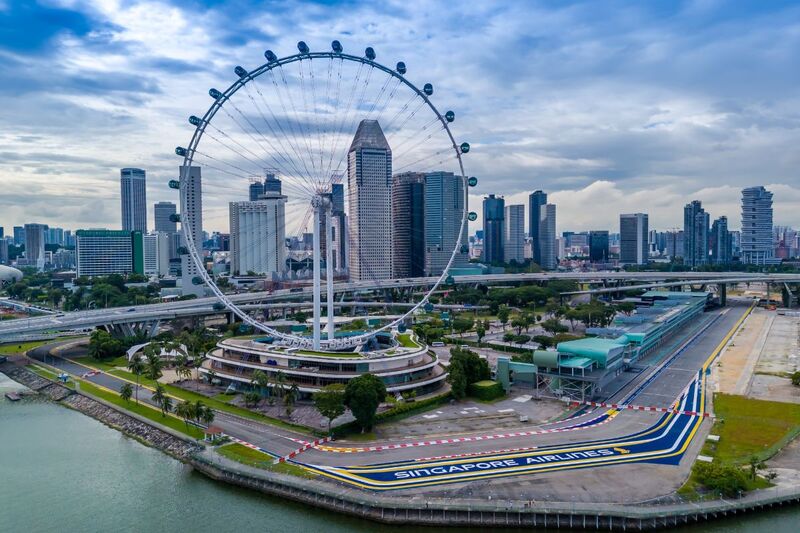 Singapore Grand Prix 2026: Which Industries and Jobs Benefit When F1 Comes to Town?Management
Formula 1 returns to Marina Bay Street Circuit for the 2026 Singapore Grand Prix from 9 to 11 October, with the wider Grand Prix Season Singapore...